








Do you need a furnace humidifier in Rhode Island

Get in touch with a local installer about a new furnace.

Match me with a pro

Rhode Island winters are cold and dry, and gas furnaces push dry air through the house for months. That dries out wood floors and trim, dries out your skin and sinuses, and lets static build up on carpets and furniture. A furnace humidifier adds moisture back into the air as it moves through the ducts, so you're not running portable units room to room. It won't matter much from April through October, since the air carries plenty of moisture on its own and your furnace isn't running. But from late fall through winter, when the furnace is on most days, a whole-house humidifier keeps indoor air closer to comfortable without you having to think about it. Whether you need one depends on how dry your home feels once the heat kicks on for the season and whether you'd rather manage that with one system instead of several small ones.

  1. Dry indoor air signals the humidistat to call for moisture.

  2. A valve opens and lets water into the unit.

  3. Water flows over a rotating or fixed evaporator pad.

  4. Warm air from the furnace plenum passes through that wet pad.

A man seen from behind raises his hand to wave at a woman standing in the open front doorway of a single-story house with gray shingle siding, white columns and a gabled porch entry.

What dry winter air does to your house

Walk through your house in January barefoot and you will feel it in your throat before you feel it anywhere else. Gas heat run that dry for months, and wood floors start to gap, trim pulls away from the wall, and you are shocking yourself on doorknobs. None of that is dramatic on its own. It adds up over a winter spent keeping the furnace running.

Finding someone to install a humidifier on your specific furnace means a round of calls first, explaining your setup more than once, then sitting with a stack of quotes trying to tell them apart. Skip that part. Get matched with a contractor who installs these on furnaces like yours, and they will reach out to go over what your house actually needs.

A living room corner with a beige upholstered armchair holding navy and striped cushions, a small round wooden side table with a carved bowl and a potted green plant, a framed landscape picture on a pale wall, built-in shelving, and a curtained window.
A gray-haired bearded man in a dark coat and scarf dusted with snow stands smiling in a dimly lit entryway with a white front door, a side table with a lit lamp, an oval mirror, and a patterned rug.
An older bearded man in a dark snow-dusted coat and gray scarf stands just inside a dimly lit home entry, with a framed picture, lit table lamp, and an adjoining room with a fireplace behind him, and snow visible through the open door.
A gray-haired, bearded man in a dark snow-dusted coat stands smiling in a dimly lit entry hall with a staircase, a lit table lamp, a framed picture, and a living room visible through a doorway.
An older man with gray hair and a beard, wearing a dark jacket dusted with snow, stands smiling in a dimly lit hallway with lamps and a living room visible behind him.

Is the dry air in your house actually a problem

You wake up with a dry throat, or your lips crack, or you get a shock every time you touch a doorknob. The Christmas tree needles pile up faster than they should. A guitar or piano in the house won't hold its tuning. Picture frames and doors that fit fine in July start sticking or gapping by February. None of this is random. It is your furnace burning through the moisture in your air, night after night, for months. Left alone, it can pull at the glue in wood furniture and the seams in flooring. A humidifier tied into your furnace puts that moisture back before it gets that far.

A gray high-efficiency furnace in a basement, connected to sheet-metal ductwork on the left and white PVC vent pipes above, with black gas and drain piping and an exposed wood-stud wall with OSB sheathing on the right.

With a humidifier running

This is a furnace doing what it should. Air moves out through the plenum and ductwork at a moisture level the pad set it to, so wood floors and trim hold their shape and your skin and sinuses stop paying for January. The gas lines and venting sit there doing ordinary work.

An older gas furnace with two louvered front panels stands on a concrete basement floor beside galvanized sheet-metal ductwork, pipes, and a weathered concrete wall.

Without one

This is the same job, running dry for months. No pad, no water line, nothing adjusting the air before it leaves the unit. The furnace heats the house fine, but everything that dry air reaches, the floors, the trim, you, gets the full effect of a Rhode Island winter with nothing softening it.

Whole-House Install or a Portable Unit

Whole-House Humidifier

  • A valve ties into your furnace and a water line, so moisture gets added every time the blower runs, no refilling anything yourself.
  • One humidistat on the wall or ductwork keeps the whole house at a set level instead of just the room you're standing in.
  • It runs on the furnace's own ductwork, so bedrooms and rooms far from the living room get the same air as everywhere else.
  • A contractor sets the pad and the humidistat for your house, so you're not guessing at a dial on a portable unit.
  • It needs a drain line and a water supply line run to the furnace, which means an install, not a plug-in.

Portable Humidifiers

  • You fill the tank by hand, which for a whole house usually means several refills a day once the cold sets in.
  • It only reaches the room it's in, so the rest of the house stays as dry as it was before you bought it.
  • The tank and wick need regular cleaning or they can grow mold and send that back into the air you breathe.
  • You can move it room to room, which helps if only one or two rooms need it rather than the whole house.
  • Nothing ties it to your furnace or your ductwork, so it adds no load to the gas line and needs no install.
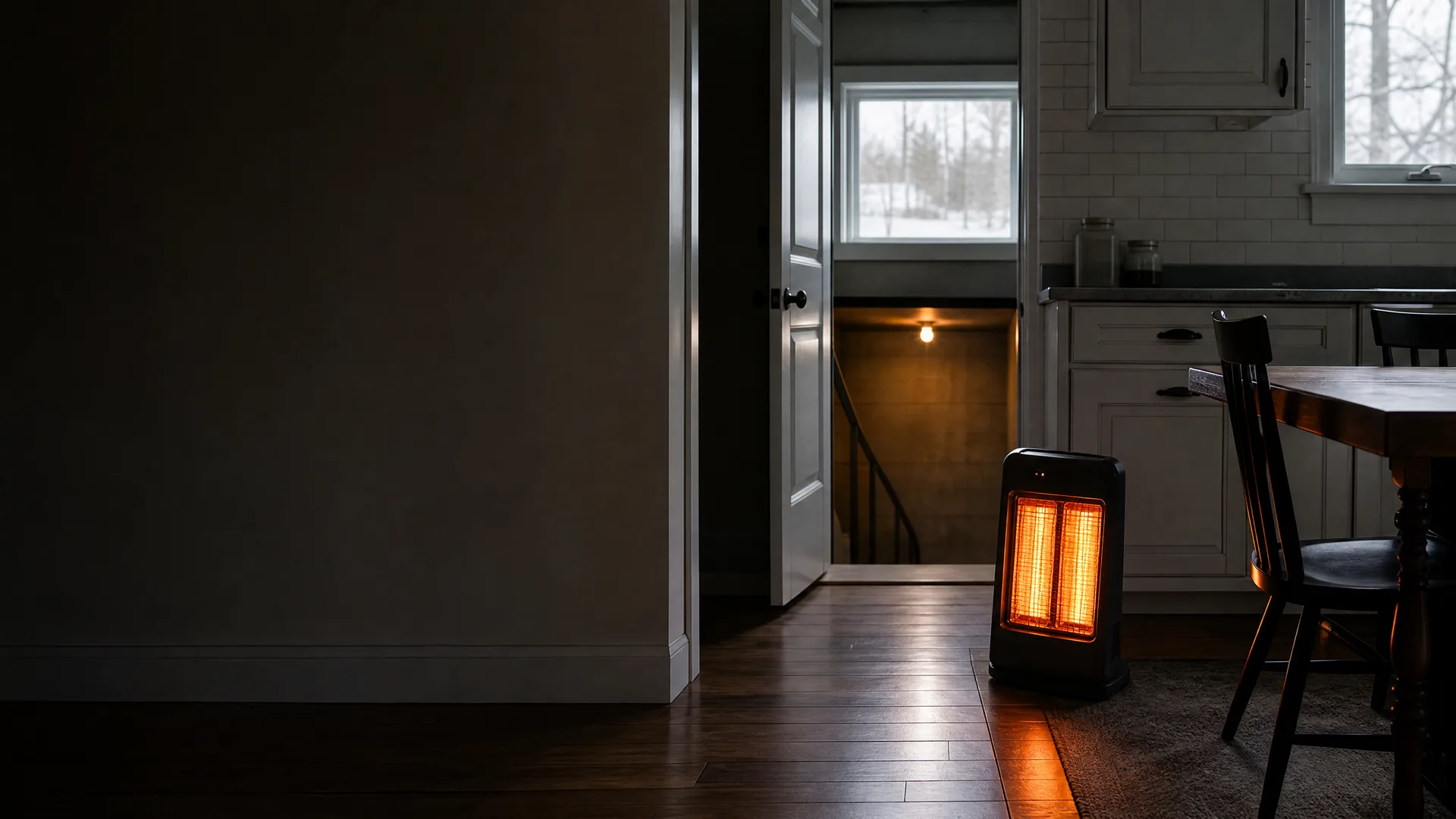
A portable electric space heater with glowing orange elements stands on a dark wood floor in a dim room beside an open door leading to a lit stairway, with a kitchen counter, window and wooden table and chairs at right.

The furnace has been running since four this morning and the house still feels cold at the edges. You bring the space heater into the kitchen and set it by the table, where it glows orange while the coffee brews. The basement door stands open behind it, the way it does most mornings now, because that's where the cold seems to come from first. Your hands find the mug just to get warm. Outside it's still dark and the roads are probably icy again. You've thought about calling someone about the furnace, about whether it should be doing more than this on its own, but the thought passes with the first sip and the day starts anyway.

A pro who works on furnaces

You already know what Rhode Island winter does to the inside of your house, and now you know why: a gas furnace with no humidifier is just blowing dry air at the problem for six months straight. Fixing it means getting a whole-house unit tied into the furnace and the water line, set up right so the humidistat and the ductwork work together instead of guessing. That's not a job to hand to whoever answers the phone first. Finding someone who installs these correctly usually means calling around, telling three or four companies the same thing about your furnace and your house, and sitting on quotes trying to compare them while the air in your house stays exactly as dry as it was. Skip that part. Tell this page what you're dealing with once, and a contractor who installs furnace humidifiers in Rhode Island takes it from there. With power costs what they are here, getting this done right the first time matters more than it would somewhere else.

The bypass type

A bypass humidifier takes warm air from the supply plenum, runs it through a wet pad, and sends it back into the return duct. It draws on the blower to move that air, so it only adds moisture while the furnace is running. There's no pump, which keeps it simple, but it also means the pad only gets wet when a damper opens. These units need a drain line and tend to use more water over a season than a fan-powered unit doing the same job in the same house.

The fan-powered type

A fan-powered humidifier has its own small motor that pushes air across the pad regardless of whether the furnace blower is on. That means it can add moisture even during a mild stretch when the furnace isn't firing much. It uses more electricity than a bypass unit, a real cost given what power runs in Rhode Island, but it covers a larger house more evenly. The tradeoff is one more moving part that can eventually wear out and need attention.

A woman wrapped in a thick beige fleece blanket sits on a sofa with an open book on her lap, beside a lit table lamp, with a frost-covered window behind her.
An older woman with gray hair in a bun and glasses, wearing a beige knit sweater, smiles while looking to the side in a warmly lit kitchen, with a loaf of bread on the counter in the foreground and a snowy scene outside the window.

Skip the humidifier

The furnace keeps the house warm and nothing more. Dry air keeps doing what it's been doing: cracked skin, static shocks, gaps opening in wood floors and trim through February and March.

Get a furnace pro

Add a whole-house humidifier

A technician ties a unit into the furnace and a water line. It adds moisture every time the blower runs, so the dry air problem stops instead of getting managed room by room.

Get a furnace pro
A gray sheet-metal furnace with flue pipe and adjacent ductwork stands against a stone basement wall on a concrete floor, with white PVC and metal pipes running nearby.
Before you get your furnace installation
A gray high-efficiency furnace with white PVC vent pipes stands against a concrete basement wall beside sheet-metal ductwork, a small condensate pump on the floor, and exposed wood framing at left.
After you get your furnace installation
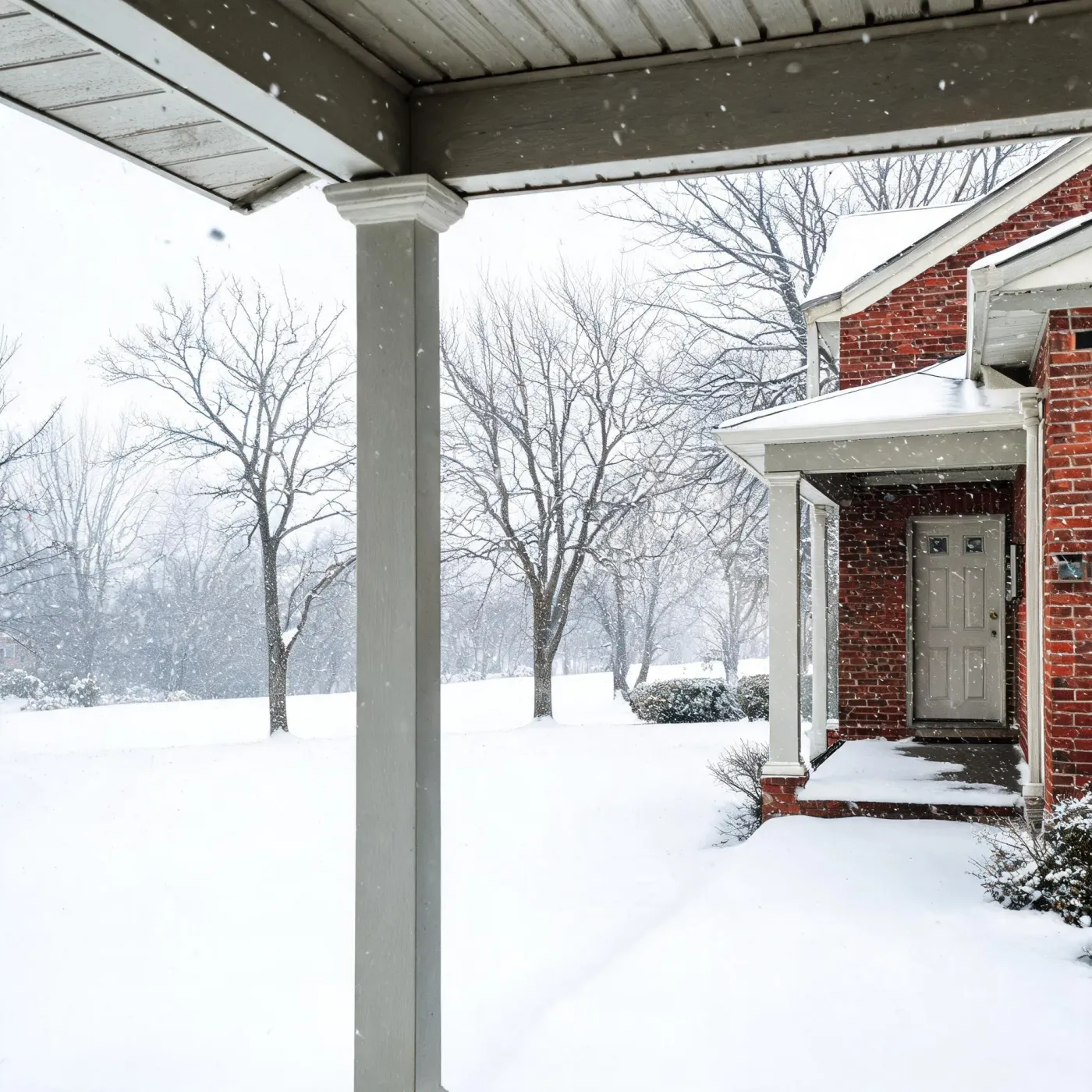
View from under a covered porch with a white column toward a red brick house entrance with a gray door, surrounded by deep snow, bare trees, and falling snowflakes.

Winter nights statewide average 23°F, according to NOAA climate data, and your furnace answers that by running long stretches with barely a break. That's a lot of hours pushing heated air through the ducts, and heated air holds less moisture than cold air once it warms, so it pulls what little humidity is left right out of the house. You'll notice it in dry skin, a scratchy throat when you wake up, maybe a shock off the doorknob. A whole-house humidifier adds moisture back in while the furnace runs that often, instead of leaving the air to dry out the whole house for months.

NOAA nClimDiv 1991-2020 county normals weighted by homes

A gray gas furnace stands on a concrete basement floor, connected to sheet-metal ductwork, white PVC vent pipes, and a yellow gas line, with plastic sheeting covering the walls.
A furnace tied into a humidifier and a water line keeps every room at one humidity level while the blower runs.
A metal furnace with louvered panels stands against a concrete basement wall, connected to sheet-metal ductwork and a round flue pipe, with wooden framing posts and a pipe nearby.
An older furnace with no humidifier added just heats the air in that dusty basement and sends it through the house as dry as it found it.

Winter nights average 23°F statewide

At 23°F, your furnace isn't cycling on and off, it's running long stretches just to hold the house steady. Every one of those hours, it's pulling in cold air that had almost no moisture to begin with and heating it dry. That's the air moving through your rooms all winter unless something adds moisture back.

NOAA nClimDiv 1991-2020 county normals weighted by homes

Where this leaves you

  • A gas furnace with no humidifier spends a Rhode Island winter blowing dry air through a house that already shows it in cracked skin and gapped floorboards.
  • A whole-house humidifier ties into the furnace and a water line, so every room gets held at one humidity level instead of just whatever a space heater or tabletop unit reaches.
  • The fix is a single installation, not a running chore like refilling a portable unit or swapping its filter through February and March.
  • Finding a contractor to do this right means calling around, explaining the same setup to each one, and sorting through quotes that are hard to compare.
  • Getting matched with a contractor who already knows this install skips that search and the repeat explaining.
  • Where you land after reading this is simple: the furnace you have can be made to answer for the dry air, not just the cold.

Your furnace already heats the house fine. What it does not do, on its own, is answer for the dry air that comes with that heat, the cracked skin, the static, the floorboards pulling apart at the seams. A whole-house humidifier tied into the furnace and a water line fixes that for every room at once, working off the same blower that is already running. It is not something you refill or fuss with the way you would a tabletop unit. Once it is installed, it runs when the furnace runs, and the humidistat handles the rest.

Getting there is the part that takes the real time. Most homeowners end up calling a few contractors, explaining the same setup to each one, waiting on quotes that are priced and worded differently enough that comparing them becomes its own chore. None of that gets you any closer to warmer skin or a floor that stops gapping. It just eats an evening or two you would rather not spend on the phone.

Getting matched with a contractor who already knows this installation skips that part. No repeat explaining, no sorting through quotes that don't line up. You answer a few questions about your house once, and the contractor who reaches out already knows what the job involves.

The furnace you have can be made to do more than keep the house warm. Whether it's worth doing is already answered by what January has been doing to your house. The rest is just getting it done.

A gray high-efficiency furnace with two access panels stands on a concrete basement floor, connected to sheet-metal ductwork and white PVC vent pipes, with wood framing and a gas line nearby.

The right pro for this job

New system or replacementFurnace or heatingRhode Island
Step 1 of 2

What ZIP code is the job in?