
Why your furnace whistles in Rhode Island

RepairFurnace or heatingRhode Island
Step 1 of 2

What ZIP code is the job in?

Why does my furnace whistle when it's running?

A whistle while your furnace runs usually isn't loud enough to ignore, but it isn't normal either. You notice it most after the filter's gone a while without a change, or if the furnace has been running long stretches during a cold snap. It's the kind of noise that makes sense to check out now, before it turns into a bigger repair or a bigger gas bill.

A whistle usually means air is being forced through a gap it shouldn't fit through

Most often it's a clogged filter. When the filter fills with dust, the blower has to pull air through a tighter opening, and that narrow path makes the whistling sound. A loose duct connection or a gap around the filter housing can do the same thing, forcing air through a crack instead of the full opening it was built for. With gas heat running most homes in Rhode Island, a blower working harder than it should also means burning more gas to move the same air through your house, and with power costs here among the highest in the country, that strain adds up on the bill too. It's worth having someone look at it before the restriction gets worse or wears on the blower motor.

A dark high-efficiency furnace on a concrete pad in a basement, connected to galvanized ductwork, white PVC vent pipes, and copper and black gas piping, with concrete walls and wood framing nearby.

Airflow moving the way it should

Air pulls through the filter and out the registers without any hiss. The blower runs at a steady hum, no strain in the sound. The cabinet stays sealed, the gas line and condensate pipe hold their fittings tight, and nothing is pulling air through a gap it shouldn't.


A gas furnace with a louvered upper panel stands on a concrete pad in a basement, flanked by sheet-metal ductwork, white PVC and metal pipes, and insulated columns.

Something narrowing the path

A whistle means air is squeezing through somewhere it shouldn't have to. A clogged filter, a closed-off return, a loose panel seam, any of these can pull a thin stream of air through a small opening and turn it into that high note you keep hearing.

Is this something you'd actually notice at home?

You'd hear it most in a quiet room, late at night or early morning when the furnace kicks on and the rest of the house is still. It might fade once the blower ramps up, or it might hold steady the whole cycle. Some notice it's louder near one register than others, which points to where the air is squeezing through. If the filter's overdue, you may also notice rooms farther from the furnace feel cooler than they should, or the furnace running longer to reach the thermostat setting. Left alone, a restricted system works harder than it needs to, and with power costs what they are in Rhode Island, that shows up on the bill before it shows up as a bigger repair.

A dark interior hallway with a dim window at the end, a wooden floor, a stair railing on the right, and a bench or rug in the foreground.

You wake up a little after 2 for no reason you can name. The hallway's cold in a way it shouldn't be. You stand there in the dark and listen, and under the quiet there's that thin whistle again, coming up through the floor vent outside your bedroom. The furnace is running, you can tell by the sound in the ductwork, but no warm air is moving against your hand. Frost has crept up the edges of the window at the end of the hall. You go back to bed telling yourself it'll wait until morning, and pull another blanket over your shoulders.

Call Now or Wait and Watch

Call now

  • A thin whistle at 2 AM can mean a cracked heat exchanger, and that's not a problem that waits until morning.
  • If the sound gets louder over a single night, or the furnace short-cycles along with it, something's changed since you last heard it.
  • Rhode Island winters don't let up, and a furnace that quits in January leaves you without heat while it's in the teens outside.
  • A local contractor who works on these furnaces every winter can usually place the whistle by where it's loudest before they even open the cabinet.
  • Gas furnaces can fail in ways that aren't safe to wait out, and a whistle paired with a gas smell or soot near the vent means stop and call.

Keep watching it

  • If the whistle only shows up right after a filter change and fades within a day, the new filter may just need to seat into the frame.
  • A whistle that stays the same pitch and only happens on the coldest nights, when the furnace runs longest, may just be a loose register you can snug yourself.
  • Checking the filter date and the return vents takes you a few minutes and rules out the two most common causes before you call anyone.
  • If the sound is faint, steady, and doesn't change when you open or close doors near the vents, it's worth a few more days of listening.
  • A whistle that's been there for months without getting worse isn't usually the kind that strands you without heat.
A beige high-efficiency furnace with white PVC vent pipes stands beside galvanized sheet-metal ductwork in a basement with a concrete floor, exposed wood studs, and metal piping along the wall.

Furnace running clean

No whistle, no hiss at the cabinet seams. The blower pulls air through the filter and pushes it out the registers without a fight. Flue gas goes out through the PVC pipe and the furnace cycles on and off without drawing attention to itself.

An older beige furnace with a louvered vent panel stands on a concrete basement floor beside galvanized sheet-metal ductwork, a metal flue pipe and vertical pipes along a concrete wall.

Furnace straining for air

Here the whistle usually traces back to the flue connection or a filter that's choking the return. The flexible flue pipe into that block wall vent depends on a tight seal, and the cabinet depends on one too. A gap in either lets the furnace pull air from somewhere it shouldn't.

A smiling man in a gray long-sleeved shirt stands in a kitchen looking to the side, with open shelves of dishes, a white mug on the counter, a potted plant, and a view through a doorway into a living room.
A smiling bearded man in a green sweater sits at a white marble kitchen island with a mug, potted plant and bowl of fruit, in a bright white interior with open shelving and an arched doorway.
A smiling man with dark curly hair and a beard, wearing a dark green knit sweater, stands at a white marble kitchen counter with a dark blue mug, with open shelving, pendant lights and a houseplant behind him.
A smiling man in a green ribbed sweater stands behind a wooden table holding a ceramic mug of coffee in a kitchen with white subway tile, shelves of potted plants, and a bowl of fruit.
A gray high-efficiency furnace with two white PVC vent pipes stands against sheet-metal ductwork in an unfinished basement with concrete floor and walls and exposed wood joists.

Hand off the furnace problem

Your request stays with one local pro.

Send the request today and let a furnace pro reach out to you.

Find a licensed pro

You're not committing to anything by asking.

A smiling man with dark curly hair in a navy t-shirt sits on a gray couch indoors, with a large-leafed plant and a window in the background.
A bearded man in a plaid flannel shirt stands in a kitchen looking out a window toward snow-covered shrubs, with a steaming mug on the windowsill and potted plants on a shelf behind him.

Think of it like wind finding a gap under a door. Your furnace's blower is pulling a set amount of air, and if the path narrows anywhere, the air speeds up through that narrow spot and makes a note. Most of the time that gap is the filter slot. A filter loaded with a season's worth of dust blocks the return path, so the blower pulls harder through whatever's still open around the edges. Closed registers do something similar from the other side, raising pressure in the ducts until air finds a seam in the plenum to escape through. A loose joint or an undersized return can whistle right at the gap once the blower gets up to speed. Since the blower motor in most furnaces runs at one fixed speed, the pitch tends to hold steady rather than rise and fall through the cycle. And if the whistle only started after you put in a new filter, check the rating on it. A thicker or higher-rated filter can restrict airflow more than the one it replaced.

What's actually causing the sound

  • The whistle is air moving too fast through a gap narrower than it should be, the same way wind picks up a note under a door.
  • A dirty filter is the usual cause because it blocks the return path and forces the blower to pull harder through whatever small openings are left.
  • Closed or blocked supply registers raise the pressure on the duct side and push air out through seams in the plenum instead.
  • A return duct that's undersized or has a loose seam will whistle at the gap itself once the blower ramps up to speed.
  • The sound usually sits at a steady pitch because the blower motor runs at a fixed speed on most furnaces, so the airflow causing it doesn't change mid-cycle.
  • If the whistle shows up only after a filter change to a thicker or higher-rated one, the new filter is restricting flow more than the old one did.
A gray furnace cabinet in a basement, connected to galvanized sheet-metal ductwork and white PVC pipes, against a concrete wall with exposed metal piping and insulation overhead.
Before you get your furnace repair
A gray high-efficiency furnace with two PVC vent pipes stands in an unfinished basement beside sheet-metal ductwork, a framed and plastic-covered wall, and a bare concrete wall with vertical pipes.
After you get your furnace repair

Why a bigger gap stays quiet

A whistle needs a narrow opening to form. A loose panel with a wide gap just leaks warm air and drives your bill up without making any sound worth noticing. It's the small, tight gaps that whistle, a crack along a seam, a gap around a duct connection, the space left when a filter doesn't sit flush in its slot. The air squeezing through picks up speed and that's what you're hearing. The furnace can run with a gap like that for a while. It won't fix itself.

Why the sound comes and goes

Static pressure inside the duct system changes with how hard the blower is working, and that pressure is what pushes air through whatever gap is causing the noise. On a short cycle, the blower might not ramp up enough for you to hear it. On a longer, colder run, pressure builds and the whistle gets clearer. That's why it can seem like it only happens some nights, or only after the furnace has been running a while. The gap hasn't changed. The airflow pushing through it has.

Winter nights average 23°F statewide

On a January night here, outdoor air sits around 23°F, so your furnace is working harder and running longer to keep the house warm. That extra draw through the filter and ductwork is exactly when a tight gap starts to whistle.

NOAA nClimDiv 1991-2020 county normals weighted by homes

A gray furnace cabinet in a basement with sheet-metal ductwork, white PVC vent pipes, and black gas piping against a concrete wall and wood-framed partition on a bare concrete floor.
A furnace like this moves air quietly when the filter's clean and every seam at the cabinet and ductwork holds tight.
A gray metal furnace with two white PVC vent pipes stands on a concrete floor beside galvanized sheet-metal ductwork in a basement or utility space with wood framing.
Rust and age on a cabinet like this often come with gaps at the seams, and that's where a whistle starts.
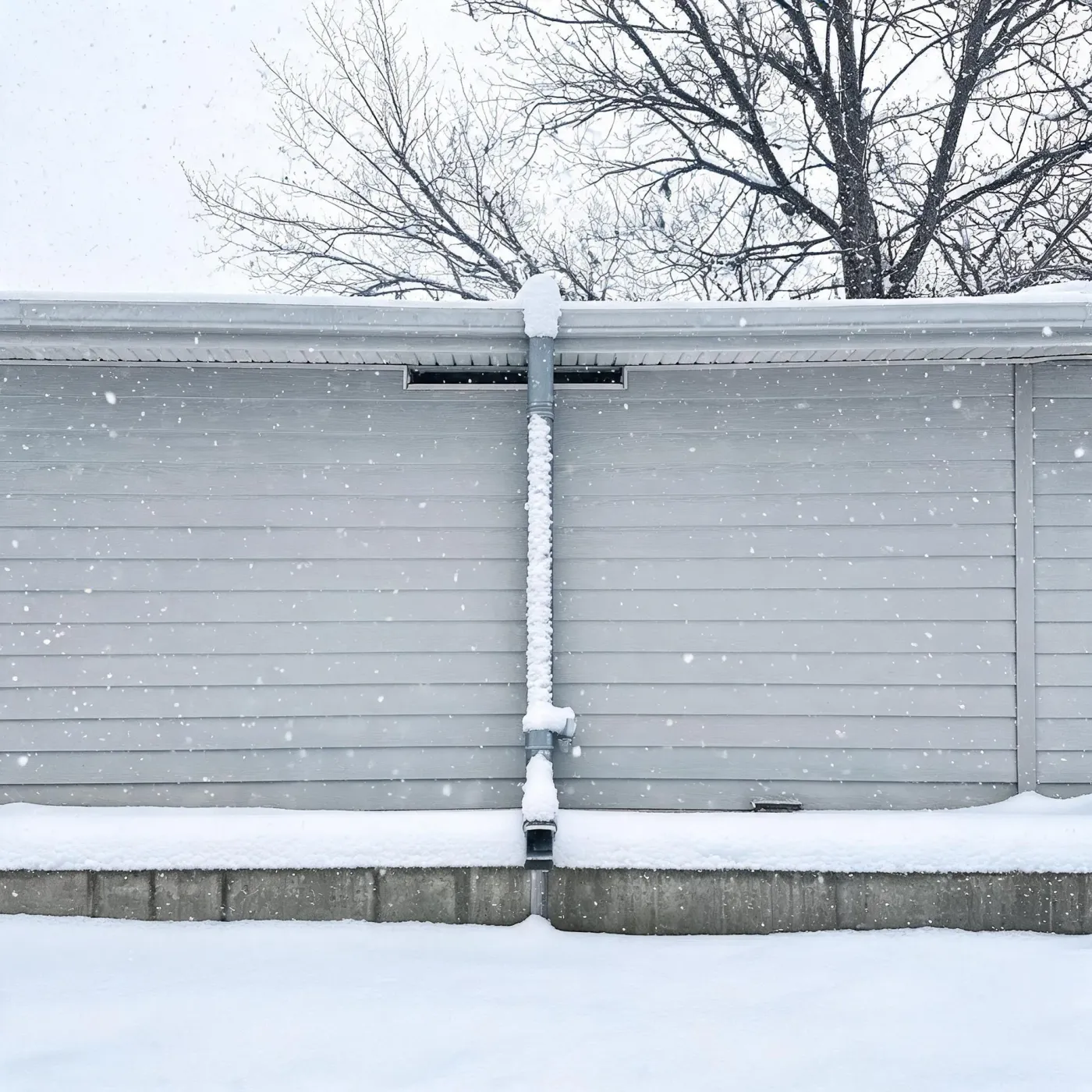
Exterior wall of a building with light gray horizontal siding and a snow-covered downspout running down its center, with bare trees behind the roofline and falling snow over deep snow on the ground.

Statewide, winter nights average 23°F, per NOAA. That's cold enough that your furnace is running long stretches to keep up, not just short bursts in the morning and evening. The longer it runs, the more air it's pulling through the filter and ductwork, hour after hour, all night. If there's a gap at a seam or a filter that's overdue, that's when the whistle shows up, because the furnace has no break where the sound might otherwise settle. A system that whistled faintly on a mild December evening can turn into one you hear clearly through January and February, simply because it's working that much longer to hold the house at temperature.

NOAA nClimDiv 1991-2020 county normals weighted by homes

A whistle is your furnace telling you about a gap or a dirty filter, nothing more, and it's worth fixing before that gap turns into a bigger repair or your gas bill creeps up from the extra work your furnace is doing to push air through. Someone who works on furnaces in Rhode Island all winter has heard this exact whistle plenty of times and knows where to check first, the filter, the cabinet seams, the ductwork, and usually finds it fast. When you send a request through this page, it goes to one licensed local contractor, not a handful of companies competing for your callback. You stay in your warm house and wait for one call instead of fielding several. That's where you stand now: a clear cause, a straightforward fix, and one person coming to handle it who already knows what furnaces in this state tend to need.

Elevated view over a dark standing-seam metal roof with a stone chimney and wood-sided gable, surrounded by conifers and autumn-colored trees with forested hills under an overcast sky.

Let someone else find the pro

Find a local pro

It costs nothing to send, and you don't have to hire anyone.

A whistle that sits there for weeks tends to cost you before it ever becomes a repair someone has to rush out for. Getting it looked at while it's still just a sound, not a breakdown, is the cheaper way for this to go.