













Why your house is dry with the heat on in Rhode Island

A local pro who services furnaces gets in touch about the tune-up.

Tune-up, service, or cleaningFurnace or heatingRhode Island
Step 1 of 2

What ZIP code is the job in?

Cold air just holds less moisture, so when your furnace pulls in cold outside air and heats it, the relative humidity in the house drops even though no water left the air itself. That's why your skin feels tight, your nose feels raw, and you might hear static crackle off the couch once the furnace has been running steady through a Rhode Island winter. A furnace doesn't dry the air on purpose. It's just moving heated air that was already dry to begin with, and running it for hours at a stretch keeps pulling the humidity down further. If your ducts leak or your house isn't sealed well, it can be worse, since more outside air gets drawn in to replace what escapes. None of this means something is wrong with the furnace. It means the house needs a way to put moisture back in while the heat runs, whether that's a whole-home humidifier tied into the system or something simpler. A technician who services the furnace can look at whether the system is set up to handle that.

A gray-haired, bearded man in a dark coat dusted with snow stands smiling in a dimly lit room with a lamp, mirror, framed art, and a sofa in the background.
An older man with white hair and a beard, wearing a dark snow-dusted coat and scarf, stands in a warmly lit interior hallway with a framed landscape picture, a table lamp and a potted plant behind him, and a snowy view through a window at left.
An older man in a dark snow-flecked overcoat and scarf stands smiling in a warmly lit home entryway, with a glass-paned door showing darkness outside and a lamp-lit room visible through a doorway behind him.
An older man with gray hair and a beard, wearing a dark snow-dusted jacket and scarf, stands smiling in a warmly lit interior hallway with a lit table lamp, a vase of dried branches, and a framed picture in the background.

Add Moisture or Just Stop Losing It

Run a humidifier

  • A furnace-mounted humidifier adds moisture to the air as it moves through the ducts, so every room on that system gets the benefit.
  • It needs the furnace running to work, so on a mild day when the burner cycles less, the air dries out again.
  • The pad or drum inside needs cleaning on a schedule or it grows scale from the minerals in the water.
  • You set a target humidity and it holds there on its own once it's dialed in, no daily adjusting.
  • Rhode Island tap water will leave mineral deposits over a winter, and that buildup is most of what maintenance on this unit is about.

Do nothing and seal drafts

  • Cutting down on cold air leaking in means the furnace heats less fresh outside air, so less of the moisture problem starts in the first place.
  • This doesn't add any moisture back, it just reduces how much the furnace has to dry out to begin with.
  • Gaps around windows, doors, and the attic hatch are where most of that cold air gets in.
  • It won't do anything about the dry air on nights when the furnace still has to run hard to keep up.
  • There's no equipment to maintain with this approach, but there's also no way to dial in a humidity number like 35 percent.
  1. Cold outside air gets pulled into the furnace's return duct.

  2. The burner heats that air, and heat holds more moisture than cold.

  3. Warm air moves through the ducts carrying the same water vapor it started with.

  4. Relative humidity drops because the air's capacity for moisture rose, not its content.

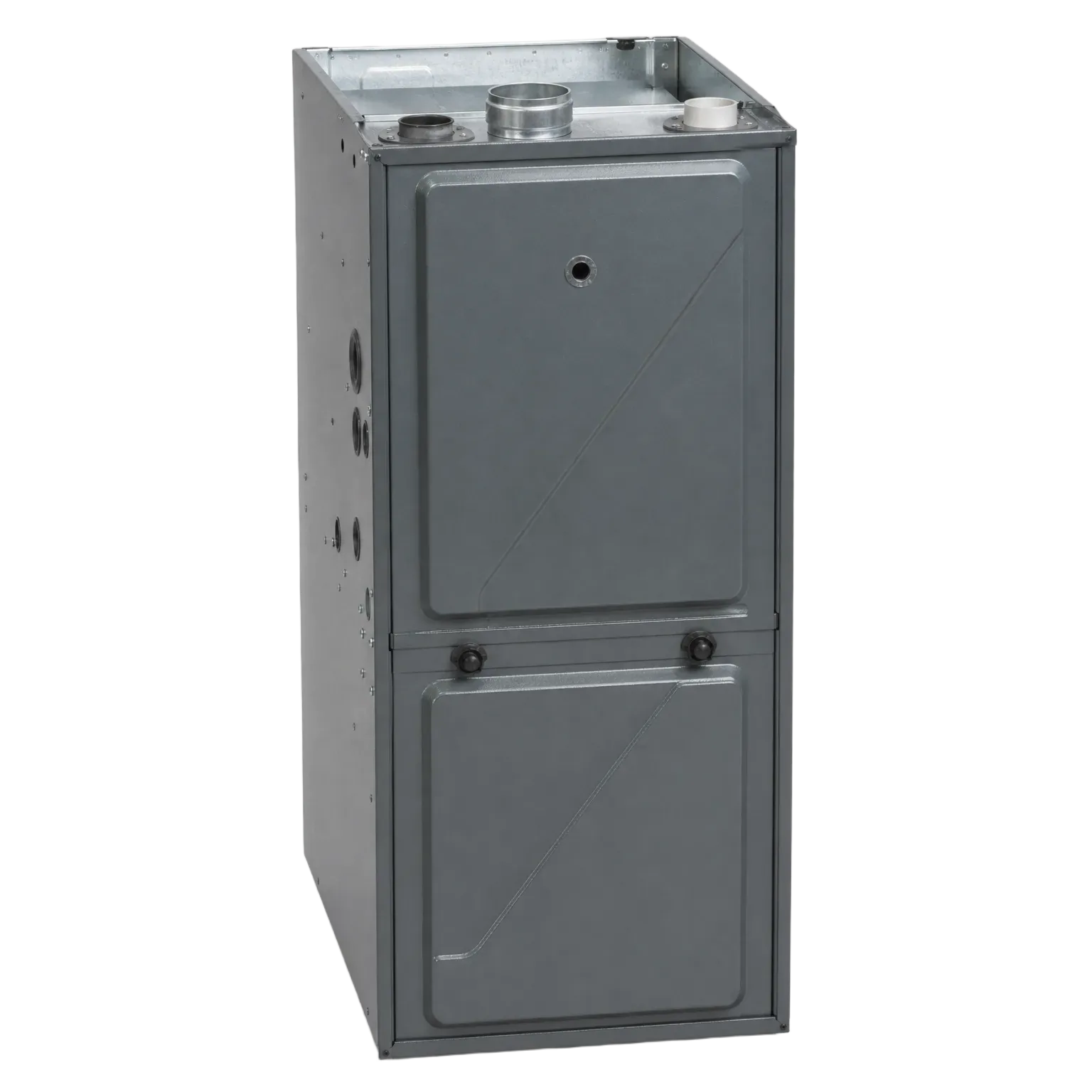
A gray high-efficiency furnace in a basement with white PVC vent pipes, sheet-metal ductwork, copper and black piping, a condensate pump, and insulated walls above a concrete floor.
A furnace running clean keeps its burner cycling the way it should, so the air passing through doesn't dry out more than the cold outside air already causes.
A beige residential furnace stands on a concrete basement floor beside galvanized sheet-metal ductwork, a round flue pipe, copper gas piping, and a PVC condensate line, with a wood-paneled wall at right.
An older furnace with worn panels and grime on the cabinet can run longer or less evenly to heat the same space, pulling in more cold air and drying the house out further.
A furnace in a dim basement with a dirty pleated air filter partially pulled out of its slot, beside a water heater and concrete walls and floor.

You're down in the basement on an October afternoon, flashlight in one hand, pulling the filter out to check it before the cold really sets in. It slides out grey, dust packed into the pleats, and you can see daylight barely through it. The furnace has already been running most mornings to take the chill off, and the air upstairs has had that tight, dry feel for a couple weeks now. You hold the filter up, turn it over, and know it's past due.

Matched to your furnace job

One request and finding someone for the tune-up is handled.

You're not committing to anything by asking.

A gray high-efficiency furnace with two access panels stands in a bare basement corner, connected to sheet-metal ductwork, white PVC vent pipes, and flexible gas and electrical lines.

Why the furnace runs so often here

Rhode Island winters sit in the 20s and 30s for weeks at a stretch, so a gas furnace here cycles far more than it would somewhere milder. Each cycle pulls in more cold outside air and heats it again. More cycles means more of that dry, heated air moving through your ducts day after day. A furnace that's been serviced fires cleanly and holds its cycle length steady, so it's not running longer than it needs to just to keep the house at temperature.

A gas furnace with metal ductwork, copper and yellow gas piping stands against a wall in an empty room with a bare concrete floor.

What a dirty burner changes

A burner coated in dust or a flame sensor reading weak doesn't heat the air as efficiently, so the furnace has to stay on longer to reach the temperature on your thermostat. That extra runtime means more cold air pulled in and dried out before it reaches your rooms. Since most homes in Rhode Island heat with gas, this isn't rare equipment, it's the furnace in your own basement. A maintenance visit checks the burner and sensor and gets the cycle back to where it should be.

Does a bigger furnace dry the house out more?

You've noticed the dry air gets worse in rooms closer to the furnace, or maybe you're wondering if the previous owner put in a furnace too big for the house. It seems like more heat should mean more moisture pulled out of the air, so a bigger unit running the same gas furnace process would seem to make the dryness worse. You want to know if the size of the unit itself is the problem, not just the fact that it's running.

Size isn't what dries the air out. Short cycling is.

A furnace that's too big for the house heats the space fast, then shuts off, then kicks back on again a few minutes later. Each startup pulls in another batch of cold outside air and heats it, and that's the step that drops the relative humidity. A correctly sized furnace runs longer, steadier cycles and goes through fewer startups to hold the same temperature. So two furnaces heating the same Rhode Island house to 68 can leave the air at different humidity levels, not because one unit is bigger, but because the oversized one is cycling on and off more often. If your furnace never seems to settle into a long, steady run, that's worth having someone check.

A gray furnace with two access panels stands on a concrete basement floor beside sheet-metal ductwork, with pipes, flexible conduit and an electrical box on the concrete wall to the left.
Before you get your furnace maintenance
A gray high-efficiency furnace stands on a concrete basement floor beside galvanized sheet-metal ductwork, white PVC vent pipes, copper and black piping, and unfinished wood stud framing.
After you get your furnace maintenance

Winter nights average 23°F statewide

At 23°F, the air outside is holding almost no moisture to begin with. Your furnace still has to pull that air in and heat it up, and the colder the air starts, the drier it ends up once the burner's done with it. Nights like that are when you'll notice it most.

NOAA nClimDiv 1991-2020 county normals weighted by homes

A gray high-efficiency furnace with white PVC vent pipes stands beside sheet-metal ductwork and a water heater in an unfinished basement with concrete walls and wood framing.

Furnace running clean

This furnace heats evenly, so the burner isn't working longer than it has to just to hold the temperature. A clean burn and a clear filter mean air moves through the ducts the way it was designed to. Dry air still shows up in winter here, but it doesn't get worse than the weather outside already made it.


A beige gas furnace with a metal flue pipe stands in a basement against concrete block walls, beside sheet-metal ductwork, copper and white plastic pipes, and a water heater at right.

Furnace running rough

An older furnace with a dirty blower or a cracked panel can run longer to put out the same heat, pulling in more cold air and heating it again and again. That extra cycling strips more moisture out of the house than the outdoor air alone accounts for. You'll notice it in cracked skin and static that doesn't let up.

A man in a dark blue shirt stands in an open front doorway of a stucco and wood-clad house, facing a blond woman seen from behind in the foreground on a stone walkway.

The dry air isn't a mystery, it's the cold

Your furnace isn't broken because the house feels dry. It's doing what it's built to do, pulling in cold Rhode Island air and heating it, and that process alone drops the humidity no matter how new the equipment is. A furnace running clean, with a clear filter and a steady burn, won't add moisture back, but it won't make the problem worse than it has to be either. That's the part worth keeping in shape.

If you're past wondering why and ready to deal with it, the next step is simple. Send the details of your furnace and your house, and you'll be matched with a contractor who handles this kind of maintenance in Rhode Island homes. They'll reach out to you directly. You won't be the one tracking someone down or calling around to find out who's available. That part is off your plate once you send the form.

Interior corner of a dining room with a round wooden table, a ceramic vase holding olive branches, a dark spindle-back chair near a curtained window, and a sideboard with a lamp against beige walls.
A woman wrapped in a cream textured blanket sits in an armchair beside a lit lamp and a dark window, with an open book in the foreground.
A smiling older woman with gray hair in a cream knit sweater stands in a dimly lit kitchen beside a window showing snow outside, with a round loaf of bread on the counter in the foreground.

A furnace pro near you

A furnace running clean and a humidifier matched to it are the two things that actually change how dry your house feels this winter. One keeps the burner cycling the way it should instead of overworking the air moving through your ducts. The other puts moisture back into that air as it circulates. Maintenance gets the furnace doing its part; a contractor can tell you if a humidifier makes sense for your setup. Send the form and that's off your plate. A contractor who serves your part of Rhode Island will reach out.

Connect with a pro

Send the form, and lining up the furnace tune-up stops being yours to chase.

It costs nothing to send, and you don't have to hire anyone.


