A gray high-efficiency furnace with two white PVC vent pipes stands beside galvanized sheet-metal ductwork in a dim basement with exposed joists and a concrete floor.

It's off your list after this

Why your furnace filter gets dirty fast in Rhode Island

A clean filter turns gray fast and you want to know why. It's not just the sticky summers or the gas furnace itself, it's what that furnace pulls through the filter every time it cycles on. This page gets into what's loading up that filter and what a look at the rest of the system might turn up. Once you send the form, you're done hunting for someone to check it.

Hand it off

A furnace filter in Rhode Island loads up fast because gas furnaces push a lot of air through that filter, and they do it often. Most homes here run on gas heat, and gas furnaces cycle on and off all winter rather than running steady, so the filter is catching dust, pet hair and whatever's in the air every single time the blower kicks on. Add in summer, when the same ductwork and blower handle cooling and humidity, and the filter is working close to year round with barely a break. A filter that's gray and clogged doesn't just look dirty. It forces the blower to work harder to pull air through it, which can mean higher bills and more strain on the parts that keep the system running. A filter that's falling behind is also an early sign worth catching before it turns into a bigger repair. Checking it on a regular schedule, not just when it looks bad, is how you stay ahead of it.

A gray high-efficiency furnace with white PVC vent pipes stands beside galvanized sheet-metal ductwork in a basement with a concrete floor, with a wooden staircase and railing at left.
Here the furnace draws air through a clean filter and the blower moves full force without strain on the motor.
An older gas furnace with louvered panels sits on a concrete pad in a basement, connected to sheet-metal ductwork and PVC and metal pipes, with a water heater and wooden stair framing in the background.
Here a clogged filter starves the blower, and dust rides past it straight into the ductwork and the coil behind it.

The blower pulls return air through the filter before any of it reaches the heat exchanger, and that happens on every single cycle. A gas furnace doesn't run one long stretch through a Rhode Island winter. It fires on and off, over and over, so the filter is doing hundreds of short pulls rather than one steady draw. The motor behind that blower runs at a fixed speed. It doesn't ease off because the filter is getting full. So a filter that's already holding dust gets the same volume of air pushed through it as a clean one, just with more resistance behind it. That resistance is static pressure, and it climbs as the filter loads, with the blower working against it the whole time. Where the return vent sits matters too. One pulling air from a kitchen or a finished basement is going to load faster than one in a hallway, because it's pulling in whatever is in that room. And a one-inch filter has less surface area to hold that dust than a thicker one, so it fills up sooner on the same amount of air.

How your filter actually loads up

  • Every time the furnace cycles on, the blower pulls return air through the filter before it ever reaches the heat exchanger.
  • A gas furnace fires in short bursts through a Rhode Island winter, so that filter sees hundreds of cycles rather than one long draw.
  • The blower motor runs at a fixed speed, so a filter already holding dust still gets the same volume of air forced through it.
  • Static pressure builds across the filter media as it loads, and the blower works against that pressure rather than easing off.
  • Return vents pull air from whatever room they sit in, so a filter near a kitchen or a finished basement loads faster than one in a hallway.
  • A one-inch filter has less surface area than a thicker one, so the same dust load fills it in less time.
A smiling man in a navy long-sleeve shirt sits at a wooden table in a kitchen and dining area, with a ceramic mug, a potted plant, and a sliding glass door behind him.
A smiling bearded man in a green henley shirt stands at a kitchen island with a gray mug, looking off to the side, with a dining area and shelves blurred behind him.
A smiling bearded man in a navy sweater sits at a white kitchen island with a ceramic mug, with open shelves, potted plants and a range hood behind him.
A smiling man in a dark olive long-sleeve shirt sits in a kitchen beside a counter with a dark mug, with a dining table, sideboard and hallway visible in the blurred background.

Humidity leaves a residue behind

Rhode Island summers run sticky, and that moisture doesn't just vanish when the furnace kicks back on in the fall. Damp air carries dust that sticks instead of passing through, and some of that film stays on the filter fibers after the air dries out. By the time cold weather sets in and the furnace starts cycling for real, the filter already has a head start on getting clogged. A filter that looks fine in September can be half loaded before the first hard freeze.


Electric rates make a clogged filter cost more

A clogged filter forces the blower motor to work harder to pull the same amount of air through it. That motor is pulling more current every time it runs, and electric rates in Rhode Island are among the highest in the country, so that extra strain shows up on the bill. It also means the motor runs hotter and longer to move the air the furnace needs. A filter changed on schedule keeps the blower running the way it was built to run, without the extra draw.

An older gas furnace with a louvered front panel stands on a concrete basement floor beside galvanized sheet-metal ductwork, a metal flue pipe, gas piping and a flexible conduit along a concrete wall.
Before you get your furnace maintenance
A gray furnace with sheet-metal ductwork, PVC vent pipes and a yellow gas line stands on a concrete basement floor beside wooden stair framing.
After you get your furnace maintenance

Stop chasing a furnace pro

A filter that grays out fast isn't something to shrug off. A furnace running on a clogged filter works harder to move the same air, and that strain falls on a blower motor you'd rather not replace mid-winter. Catching it now, before January, matters more here than most places, since Rhode Island power costs are among the highest in the country and a strained blower only adds to that bill. You already know the drill when something's off with the furnace: find a contractor, explain the filter situation, wait on a quote, maybe call two more to compare before you trust anyone with it. That's the part worth skipping. Send the request once and the search is handled, not five calls you have to make and track yourself. You still get the furnace looked at, the filter checked against what your system actually needs, and a straight read on whether it's just the humidity and the gas heat doing what they do, or something in the house pulling more dust than it should.

A gray high-efficiency furnace in a basement with PVC venting pipes, a yellow gas line, metal ductwork, concrete walls and floor, and a wood-framed stairway at left.

Filter doing its job

This is a clean filter, pleated and pale, fitted tight against the plenum. Air moves through it easy and the blower isn't straining to pull it through. A furnace like this one can hold that filter's color for weeks before it's worth a second look.

A beige furnace with a louvered front panel and metal ductwork stands on a concrete basement floor beside pipes and a white cylindrical water heater.

Filter past its point

This furnace has been running on a filter that's long past changing. The louvered vents are pulling return air through fibers already packed with what they caught months ago. Left alone, dust stops stopping there and starts riding into the ductwork beyond it.

Does the thermostat setting make the filter dirty faster too?

You've noticed the filter grays out faster during stretches when the thermostat is set higher, and you're wondering if that's really connected or just a coincidence tied to the cold snaps you've been having.

Yes, a higher setting means more cycles, and more cycles means more air through the filter

A furnace doesn't run on a timer, it runs on the gap between room temperature and what the thermostat is set to. Push that setting up a few degrees and the furnace closes that gap more often, which means more cycles, and every cycle is another pull of return air through the filter. A thermostat held at 72 through a cold Rhode Island snap will put more hours on that blower than one held at 68. Setting it back a few degrees when you're out, or overnight, cuts down the number of times air gets drawn through the filter and stretches out how long it stays clean between swaps.

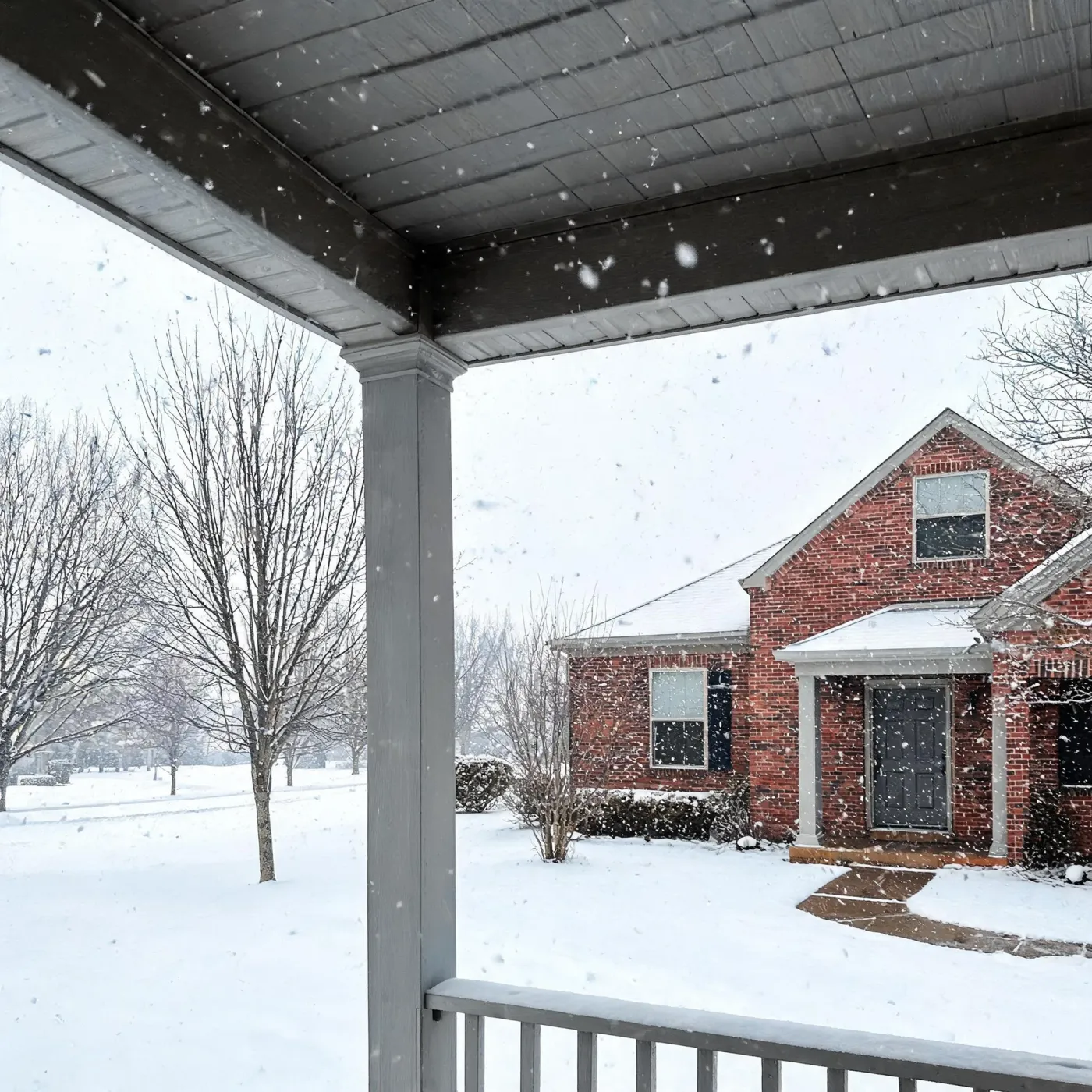
View from a covered porch with a white post and railing toward a red brick house across a snow-covered yard, with falling snow and bare trees.

Winter nights across Rhode Island average 23°F, per NOAA data, and that cold is what keeps your furnace cycling on and off for hours at a stretch instead of running once and shutting down. Each time it fires, the blower pulls another draw of air through the filter. On a mild night it might cycle a handful of times. On a night that cold it runs far more, and every one of those cycles pushes more dust into the same fibers. That's why a filter that looked fine in November can look gray by the coldest weeks of January.

NOAA nClimDiv 1991-2020 county normals weighted by homes

Why does your filter look gray after just a few weeks?

Pull the filter and hold it up to the light. If you can't see through it the way you could when it was new, it's already working harder than it should. You might notice the air coming out of the vents feels thinner, or the furnace seems to run longer stretches to hit the temperature on your thermostat. Some rooms may feel less warm than others. That's the blower straining to pull air through a filter that's mostly blocked, and it'll keep doing that until the filter is changed. Left too long, the dust that can't get through the filter starts riding past it into the ductwork and settling on the coil, which means the furnace is working against itself every time it cycles on.

A gray high-efficiency furnace stands on a concrete basement floor beside galvanized sheet-metal ductwork, with white PVC vent pipes, gas and water lines, and unfinished wood framing behind it.

Running clean

The flue pipes are clear, the air handler isn't straining, and the ductwork is moving full airflow to every room. A furnace set up like this, with a filter changed on schedule, keeps its blower running the way it was built to run.

A beige furnace with two louvered front panels stands on a concrete basement floor beside galvanized ductwork, metal pipes, and a wooden post.

Running choked

Same gas lines, same flue vent, but a filter nobody's checked in months is starving this one. The blower has to work harder to pull air past it, and whatever gets through heads straight down that ductwork toward the coil.

Winter nights average 23°F statewide

At 23°F overnight, your furnace isn't shutting off for long before it has to fire again. That's a lot of cycles between December and February, and every one pulls another draw of air through the filter sitting in there.

NOAA nClimDiv 1991-2020 county normals weighted by homes

A man in a blue T-shirt sits on a light gray sofa, laughing while looking at an open laptop in the foreground, with a framed picture, lamp and potted plant behind him.
A bearded man in a blue and brown plaid flannel shirt stands indoors looking out a window at snow-covered trees, with a ceramic mug on the windowsill.
A closed silver laptop and a glazed ceramic mug on a wooden table, with a blurred kitchen counter, potted plant, cutting board and window in the background.

A filter that grays out fast is telling you something real

Your furnace filter loads up quick because it has to. Rhode Island winters keep that blower cycling for hours at a stretch, and the sticky air every summer leaves behind a residue that catches dust instead of letting it pass through. None of that is a flaw in your system. It's what gas heat in this state does to a filter, cycle after cycle, month after month.

Once you know why it happens, the only thing left is staying ahead of it, and that's the part most people don't have time for. Instead of searching around for someone to look at your furnace, calling a few numbers, explaining the same filter problem over and over, and sitting with quotes trying to compare one against another, you send one form. From there, finding someone to handle it stops being something you have to manage yourself.

Interior corner of a living room with a beige upholstered sofa and dark cushion in the foreground, a ceramic vase of leafy branches on a dark side table by a curtained window, a framed picture on the wall, and a wood-surround fireplace at right.
A dark gray high-efficiency furnace with two white vent pipes and connected sheet-metal ductwork stands in an unfinished basement with concrete walls, a support pole, and a small window.

Send one request and you're done looking

Tune-up, service, or cleaningFurnace or heatingRhode Island
Step 1 of 2

What ZIP code is the job in?