Profile view of a bearded man wearing a dark green baseball cap and a dark gray T-shirt against a plain light background.

Furnace carbon monoxide signs in Rhode Island

RepairFurnace or heatingRhode Island
Step 1 of 2

What ZIP code is the job in?

What are the signs of carbon monoxide from my furnace?

Your furnace has been running most days now that the weather's turned, and something feels off. Maybe there's a faint smell, or the pilot light looks different than it used to, or everyone in the house has had a headache that lifts when you leave. With most homes in Rhode Island heating with gas, a furnace that isn't burning clean is worth taking seriously before you guess at what's wrong.

A yellow or flickering burner flame instead of blue, soot near the furnace, and headaches that ease when you leave the house

A gas furnace should burn with a steady blue flame. If it's turning yellow or flickering, or you notice soot around the furnace or streaking near the vents, the gas isn't burning the way it should, and carbon monoxide is a byproduct of that. Watch for headaches, dizziness or nausea that show up when you're home and fade once you're outside, especially if more than one person in the house notices it. A carbon monoxide detector sounding off is the clearest sign of all, and it should never be ignored or reset without finding out why it went off. With a furnace running for months at a stretch through a Rhode Island winter, a problem with how it's venting or burning gas doesn't go away on its own.

A gray high-efficiency furnace in a basement with PVC vent pipes, sheet-metal ductwork, copper and insulated pipes, a water heater at left, and an unfinished wood-stud wall at right.

Running clean

A gas furnace that's venting right burns with a steady blue flame and sends its exhaust straight out through the PVC flue pipe. No soot around the cabinet, no odd smell near the vents, no streaking on the pipe itself. The basement around it stays dry and smells like nothing at all.


An older beige furnace with louvered front panels stands on a concrete basement floor beside galvanized ductwork, metal and plastic pipes, exposed wood framing, and a cylindrical water heater at right.

Signs of trouble

A flame that burns yellow or flickers instead of holding steady points to incomplete combustion. Rust or soot stains near the flue connection, a scorched look around the burner, or moisture collecting on nearby windows can mean exhaust isn't leaving the house the way it should. Any of these is worth a look.

An older gas furnace with two white PVC vent pipes stands on a concrete basement floor beside galvanized sheet-metal ductwork, flexible conduit, and piping along a wall.
Before you get your furnace repair
A gray high-efficiency furnace with white PVC venting pipes stands on blocks in a basement next to sheet-metal ductwork, with exposed wood framing on the left and a concrete wall and floor.
After you get your furnace repair

Gas burning in your furnace always makes some carbon monoxide. Normally it goes straight out the flue. The trouble starts when the heat exchanger develops a crack. That lets combustion gases leak into the airstream your blower is pushing through the ducts and into your rooms. Your furnace has safety switches, a flame sensor and a limit switch among them, built to shut things down when something's wrong. They don't catch every crack or blockage, so a furnace can keep running while still putting out carbon monoxide. There are things worth checking yourself. Look at the flame. It should burn steady blue. Yellow or orange means combustion isn't complete, and that means more carbon monoxide. Soot around the furnace door or near your registers is another sign gases aren't venting the way they should. And pay attention to how you feel. Headaches or nausea that fade when you leave the house and come back when you're inside, especially while the furnace is running, aren't something to brush off. A carbon monoxide detector near where you sleep catches what your nose can't, since the gas itself has no smell at all.

How carbon monoxide gets into your air

  • A furnace makes carbon monoxide any time gas burns, and a cracked heat exchanger lets it mix with the air your blower pushes through the ducts.
  • The flame sensor and limit switch are meant to shut the furnace down if something's wrong, but they don't catch every kind of crack or blockage.
  • Soot stains above the furnace door or around registers usually mean combustion gases are going somewhere other than the flue.
  • A flame that burns yellow or orange instead of steady blue points to incomplete combustion, which raises carbon monoxide output.
  • Headaches or nausea that ease up once you leave the house, but return when you're back inside, often track with when the furnace cycles on.
  • A carbon monoxide detector near sleeping areas catches what you can't smell, since the gas has no odor of its own.
A beige high-efficiency furnace stands on a concrete basement floor beside sheet-metal ductwork, with white PVC vent pipes, flexible conduit and copper and steel piping running up a concrete wall to an electrical box.
A steady blue flame and a clean flue pipe mean the furnace is burning gas all the way and pushing the exhaust where it belongs.
An older gas furnace with a louvered front panel stands on a concrete basement floor beside large sheet-metal ductwork, a metal flue pipe, copper piping and wood framing.
A yellow or flickering flame, rust on the flue pipe, or soot at the cabinet seam means the gas isn't burning clean and the exhaust may not be either.

Your furnace sits in the basement, close to where the family room or the laundry is, and a crack in the heat exchanger doesn't announce itself there. You'd notice the pilot burning yellow instead of blue, or a headache that shows up most evenings and clears once you're outside or at work. A gas leak you can smell. Carbon monoxide you can't. With the furnace running most days from here through spring, the exhaust problem that started small in November doesn't fix itself by January. A cracked heat exchanger keeps leaking the same way every time the burner fires, and a working carbon monoxide detector near the bedrooms is what actually catches it, not your nose. Waking up foggy, kids more tired than usual, a pet seeming off. Those are worth paying attention to on a night the furnace has been running for hours.

Winter nights average 23°F statewide

At 23°F, your furnace is firing most of the night, every night, from December through February. That's a lot of hours for a cracked heat exchanger to leak carbon monoxide into the air your blower is pushing through the house.

NOAA nClimDiv 1991-2020 county normals weighted by homes

Why detectors matter more here

A carbon monoxide detector catches what your nose and eyes can miss, and with your furnace running most nights from December through February, it's working long hours in rooms where nobody's standing around to notice a smell or a headache starting. Rhode Island building code calls for a CO detector on every level of the house and outside each sleeping area. Battery ones fail if nobody swaps the battery. Plug-in models with battery backup keep working if the power drops, which matters given how often winter storms knock out power here. Check the test button once a month. If an alarm sounds, that's not a glitch to reset and forget.

What the furnace can't tell you

The flame sensor and limit switch shut a furnace down for its own protection, not for yours. They react to a flame that's gone out or a cabinet that's overheating, not to carbon monoxide leaking past a cracked heat exchanger into the air your blower pushes through the ducts. A furnace can keep running for weeks with a crack like that, heating the house the way it always has, while CO mixes in with the warm air going to every room. That's the gap a detector is built to cover, and it's also why a furnace that seems to be working fine still needs a look from someone who can test it directly.

A smiling woman with dark shoulder-length hair in a cream V-neck sweater sits at a marble counter with a glass of red wine, with a kitchen and softly lit living room behind her.
A woman in a dark green sweater laughs while seated at a marble kitchen island with a glass of red wine, with open shelving, cabinets and a living room visible behind her.
A woman with long dark hair in a cream knit sweater laughs while looking off to the side, seated at a counter with a glass of red wine, in a dimly lit living room with a sofa, lamp, framed pictures and houseplant behind her.
A smiling woman with long dark hair in a beige sweater sits at a marble kitchen counter with a glass of red wine, with a dimly lit living room behind her.

Get your furnace to the right pro

Skip searching for a furnace pro and answer a few questions instead.

You only hire the pro if you want to.

You can wait and watch for the signs, checking the flame color and the flue pipe yourself every so often while the furnace keeps running most nights through the winter.

Or you can get a contractor who checks the heat exchanger and the flue properly, so you're not the one deciding if a smell or a headache means something.

A smiling bearded man in a navy crewneck sweater sits at a dinner table with a glass of red wine, plates and glasses in the foreground, in a dimly lit room with a lamp and framed picture behind him.
A woman in a dark gray sweater reclines on a light sofa with eyes closed and a slight smile, under a textured gray blanket with an open book resting on her lap, with a lit table lamp and plant in the background.

Why does everyone in the house seem tired lately

You've probably noticed it without naming it. Headaches that show up by evening and fade once you're outside or asleep. The kids cranky in a way that doesn't match anything else going on. A smell near the furnace that isn't quite gas, more like something scorched. Maybe the pilot's burning yellow instead of blue, or there's a thin line of soot where the cabinet seams meet. None of this is dramatic on its own, which is why it's easy to blame on a cold going around or a long week. But carbon monoxide doesn't announce itself, and a household breathing it in all winter, every time the furnace runs, is carrying a risk that only gets worse the longer it goes unchecked.

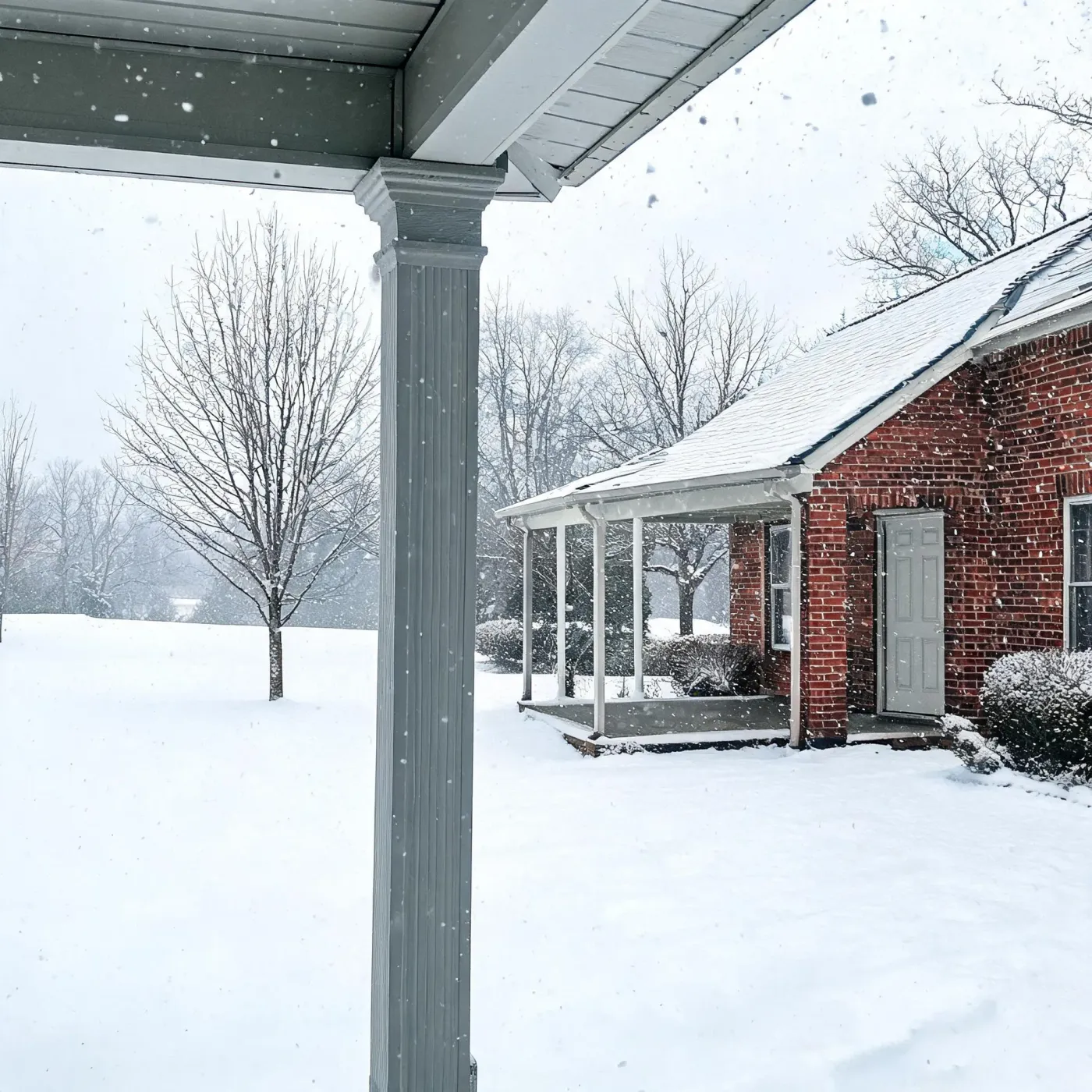
View from under a covered porch with a gray square column toward a red brick house with a white-columned porch and gray door, with falling snow covering the yard, roof, and bare trees.

Winter nights statewide average 23°F, according to NOAA climate data. Your furnace isn't cycling on and off at that temperature, it's running close to straight through the night, every night, from December into February. Each hour it runs is another hour gas is burning somewhere close to your living space, usually the basement. If the heat exchanger has a crack, that's another hour for exhaust to mix with the air moving through your ducts. A furnace that only kicked on for a few minutes at a time would give you less to worry about. One running most of the night doesn't.

NOAA nClimDiv 1991-2020 county normals weighted by homes

Check it yourself, or get it checked

Wait and watch

  • You check the flame color yourself when you think of it, which on a busy evening might be never.
  • Your nose has to catch a smell that carbon monoxide itself doesn't have.
  • You're relying on a cracked heat exchanger to get worse slowly enough that someone notices before it's serious.
  • The furnace keeps running most nights through the winter whether or not anyone's checking on it.
  • If something is wrong, you still have to find a contractor, explain the problem, and wait for an opening.
  • A detector helps, but it's telling you the air is already bad, not warning you ahead of that.

Get it checked

  • A contractor can pull the furnace apart far enough to see the heat exchanger itself, not just guess from the flame.
  • A combustion analyzer reads what's actually coming out of the flue, which your eyes can't do.
  • If the exchanger is cracked, it gets found before another night of running, not after someone wakes up with a headache.
  • You skip calling around and comparing quotes yourself; you get matched with someone and they reach out to you.
  • You stop explaining the same symptoms over and over to different people on the phone.
  • Whatever's wrong gets named instead of guessed at, which matters most with something you can't see or smell.
A gray high-efficiency furnace with white PVC vent pipes stands in an unfinished basement beside sheet-metal ductwork, gas piping, and insulated stud walls on a concrete floor.

This is what a furnace looks like when it's fine

The flue pipe runs straight up clean, no rust, no streaking. The gas line and drain pipes are hooked up tight and nothing's loose at the cabinet. A furnace set up like this is doing what it's supposed to, burning gas and pushing the exhaust outside where it belongs.

A beige sheet-metal furnace with a louvered upper panel stands on a concrete basement floor, connected to galvanized ductwork, white PVC vent pipes, and a metal gas line with an electrical box.

This is what trouble can look like

Nothing here looks dramatic, and that's the problem. A furnace can sit on the floor looking ordinary, ductwork connected, flue pipe in place, and still have a cracked heat exchanger inside the cabinet you can't see. The trouble is on the inside, not the outside.

A woman in a cream sweater and jeans stands in the open doorway of a white stucco house, holding the dark door, while a man in a dark quilted jacket seen from behind walks toward the entry past potted plants.

You know what to look for now

A steady blue flame, a clean flue pipe, no smell, no headaches that lift when you leave the house. That's what a furnace running clean looks like, and now you know what it looks like when it isn't. Rust on the pipe, soot at the cabinet, a yellow flame, everyone tired for no reason you can name. You don't need a meter to start paying attention. You just need to look.

What you don't need is to spend tonight calling furnace companies, explaining the yellow flame and the headaches to one receptionist after another, then sitting on quotes trying to guess which contractor actually knows a cracked heat exchanger from a dirty burner. Get matched with a contractor who handles this where you live, and they'll reach out to you. One call explained, not five.

A living room corner with a beige sofa and cushion, a round wooden coffee table holding a pale ceramic vase of eucalyptus stems and a wooden bowl, and a curtained window with a potted plant above a latticed radiator cover in the background.
A dark standing-seam metal roof with a stone chimney and metal cap, seen against a backdrop of autumn-colored forest and layered hills under an overcast sky.

The right pro for this job

Match me with a pro

Asking costs nothing, and the choice to hire stays yours.

A cracked heat exchanger doesn't fix itself, and every night your furnace runs through this winter is another night it has the chance to leak. Send the request and a contractor who checks the flue and the flame properly will reach out, so you're not the one standing in the basement guessing.