Mini Split Installation in Westerly, RI
A new system here will heat from October through May and cool from July through August every year. Tell us about the house, and a licensed contractor who covers Washington County will get in touch.
Tell us about the job
It takes about a minute.
Ten months of work for a mini-split here
Winter nights in Westerly average 24°F from December through February, and homes need heat from October through May. That is 8 months of heating. Add July and August for cooling and a mini-split here runs 10 months out of 12, with only a short stretch in spring and early fall when it can rest.
A lot of homes in Washington County still heat with fuel oil, and a mini-split is often what replaces or backs up that system. Whatever gets installed has to hold up on a 24°F night and still keep a room comfortable on a 79°F afternoon. Any new unit manufactured from 2023 on has to meet 14.3 SEER2 for cooling and 7.5 HSPF2 for heating, the federal minimum for this kind of system. That is the floor, not a guarantee of comfort on the coldest nights, so the sizing and the install matter as much as the rating on the box.
- 8 months
- October through May, your system heats
- 2 months
- July through August, it cools
- 24°F
- the average winter night it heats against
- 79°F
- the average summer afternoon it cools against
NOAA nClimDiv, 1991–2020 normals
Rhode Island requires HVAC contractors to hold a state license.
Rhode Island's Department of Labor and Training tests contractors before it licenses them, and it keeps the record of who holds one. That license belongs to the contractor, not to any single job, so the same license that lets a company install a furnace lets it install your mini-split.
Beyond the license, a mini-split installation in most cities and counties still needs a permit from the local building office, with an inspection once the work is done. The inspector is checking the installation itself, separate from whatever the state license already tells you about the contractor.
Source: Rhode Island General Assembly
- Is a mini split worth it?
- For most homes here, yes, especially if a room or addition never gets warm enough in winter or cool enough in summer. Winters run cold, with nights averaging 24°F from December through February, and a mini split rated for cold climates will keep working through that. It also covers July and August cooling without any ducts. Whether it makes sense for the whole house or just part of it depends on how the house is laid out, so a contractor should walk through it with you.
- How many rooms can a mini split cover?
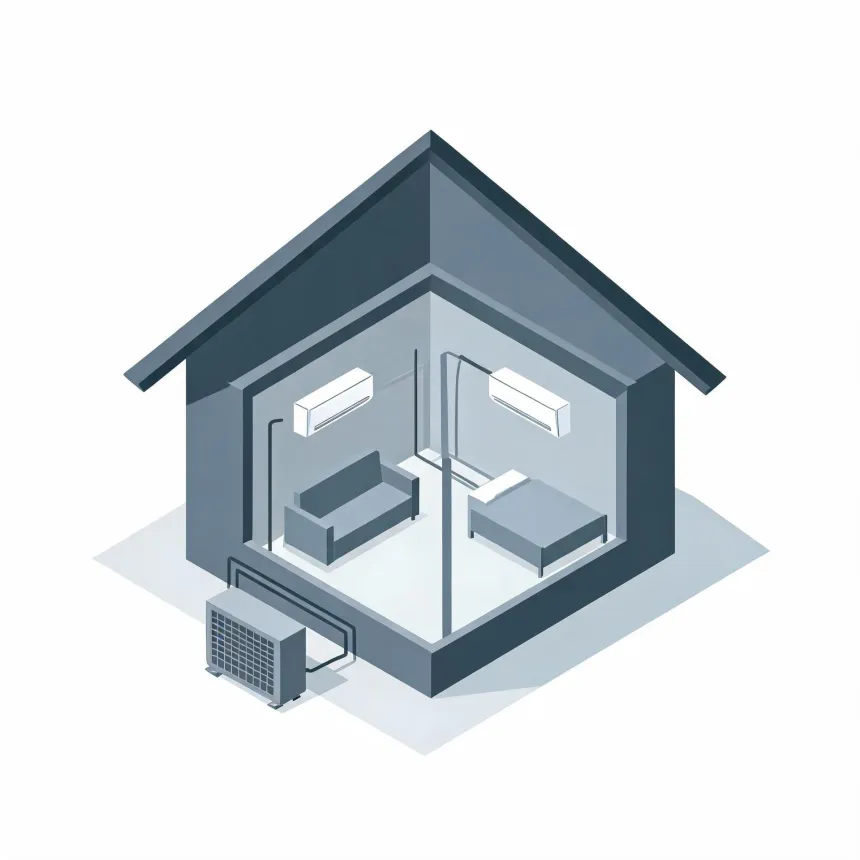
- A single outdoor unit can run more than one indoor head, so it can cover several rooms, not just one. Each indoor head is sized to the room it serves, so a contractor has to look at the square footage, the windows, and how the rooms connect before saying how many heads your house needs. Homes here need heat or cooling ten months out of the year, so getting that sizing right matters more than it would somewhere milder.
- Can a mini split heat a whole house?
- It can, if enough indoor heads are placed to reach every room, but that is a different job than heating one or two rooms. Winters here average 24°F at night from December through February, so any mini split doing whole-house heat needs to be a cold-climate model rated to keep up at those temperatures. A contractor can tell you, room by room, what it would take to heat your house this way.