
HVAC Installation in Westerly, RI
A new system here will heat from October through May and cool from July through August every year. Tell us about the house, and a licensed contractor who covers Washington County will get in touch.
Tell us about the job
It takes about a minute.

Ten months a year, your system is the only thing standing between you and the weather outside
Westerly asks a lot of a heating and cooling system. Winter nights average 24°F from December through February, and homes here need heat from October clear through May, eight months of the year. That is a long stretch for a furnace or heat pump to carry, and a new system has to be sized and installed to hold up over that many months of work, not just the coldest week.
Summer is short here, just July and August, with afternoons averaging 79°F. But cooling still has to work when it counts. A lot of Westerly homes run on fuel oil heat, and if you are replacing that system or adding central air alongside it, the installation has to account for both jobs, keeping the house warm most of the year and cool for the two months it matters most.
- 8 months
- October through May, your system heats
- 2 months
- July through August, it cools
- 24°F
- the average winter night it heats against
- 79°F
- the average summer afternoon it cools against
NOAA nClimDiv, 1991–2020 normals
Rhode Island requires HVAC contractors to hold a state license.
The license is issued to the contractor, not to the job, so it stays in place across every installation that contractor does rather than getting reissued each time. Rhode Island's Department of Labor and Training is the body that tested and holds the record on the company sent to your home.
For a heating and cooling installation, the license covers who is allowed to do the work. What covers the work itself is the local permit and inspection. Most cities and counties require a permit before a furnace, air conditioner or heat pump gets replaced, and an inspection once it is in, so the building office checks the finished installation independent of the contractor who did it.
Source: Rhode Island General Assembly
- When should I replace my HVAC system?
- Once it needs repairs more winters than not, or it can't keep up on the coldest nights. A furnace working hard at 24 degrees is already at its limit, and a system near the end of its life tends to fail on the night you need it most. If yours is old enough that a contractor has mentioned replacement during a service call, that's the point to start planning instead of waiting for a breakdown in the middle of winter.
- Should I replace my furnace and air conditioner at the same time?
- If they're close in age, yes, that's usually the better time to do it. Homes here run the furnace from October through May and the air conditioner in July and August, so the furnace wears more and often needs replacing first. But a furnace and air conditioner installed together are matched to work as one system, and pairing an old air conditioner with a new furnace, or the other way around, can leave you replacing the second one sooner than you'd like. A contractor looking at both units can tell you whether they're close enough in age and condition to make replacing them together worth it.
- What happens during an HVAC installation?
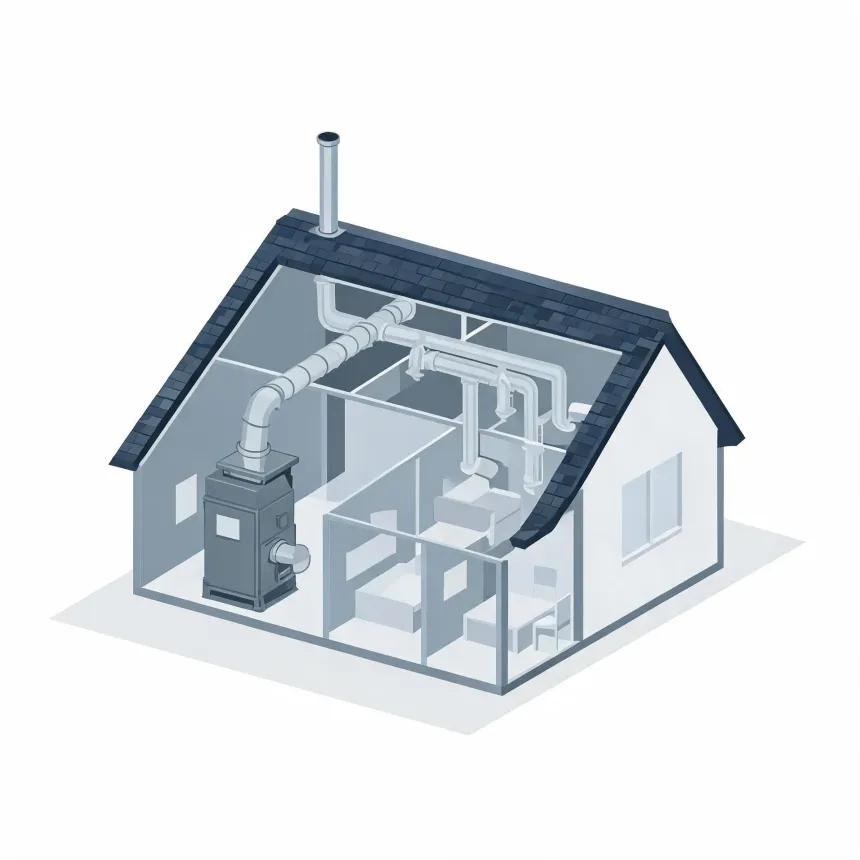
- A contractor removes the old furnace and air conditioner or heat pump, then sets the new equipment in place and connects it to your ductwork, gas or electric line, and condensate drain. After that comes startup, where the system is run and checked, and airflow and refrigerant charge are set to match your home. Replacing a furnace or air conditioner requires a permit from the local building office in most places, and an inspector checks the completed work before the job is closed out.