
HVAC Repair in Warwick, RI
Homes here need heat from October through May and cooling from July through August. If your system quits, tell us what it's doing and a licensed contractor who covers Kent County will get in touch.
Tell us about the job
It takes about a minute.
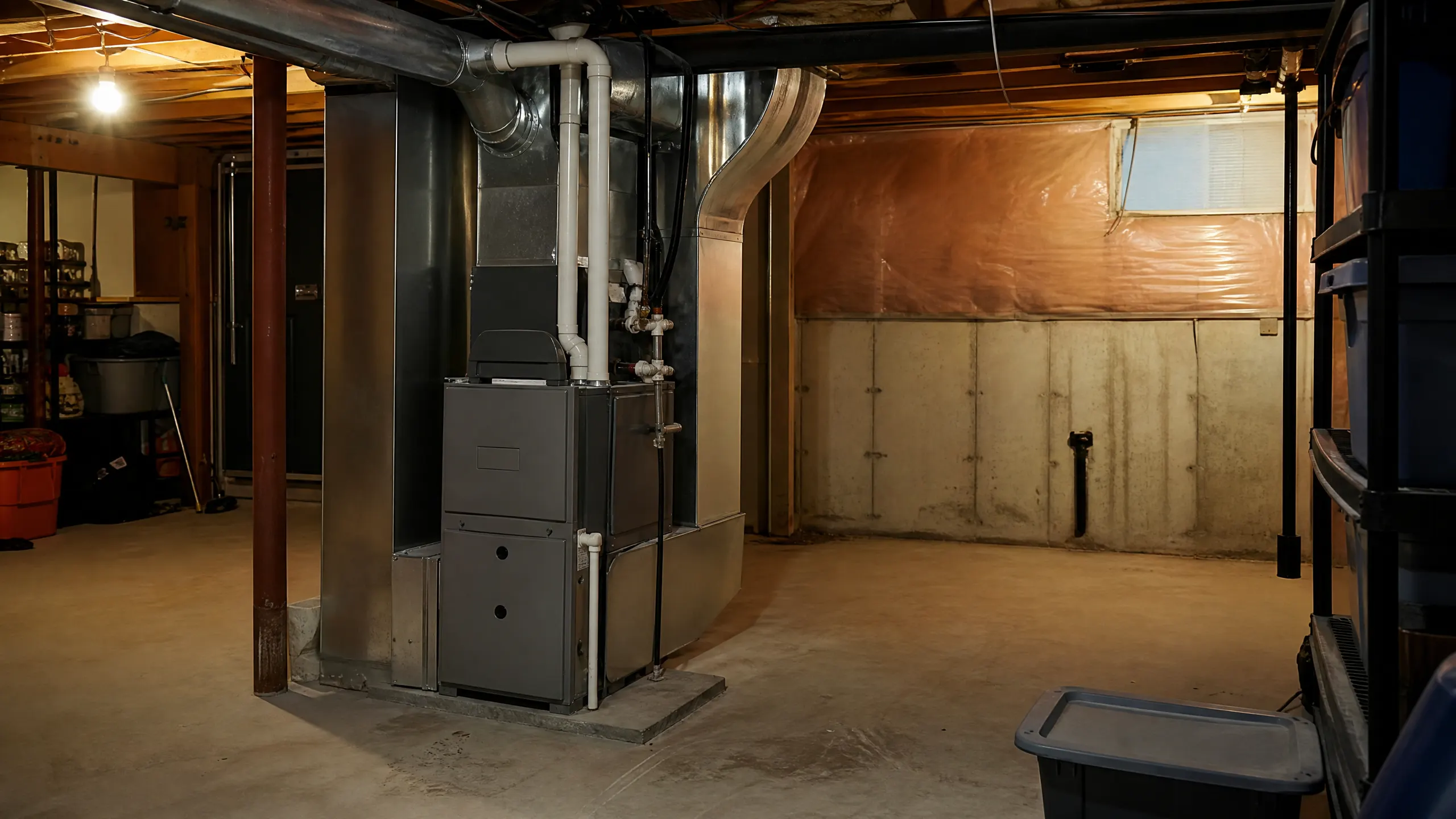
Ten months of work a year, in Warwick's swings
Your furnace and your AC don't get much rest here. Heat runs October through May, then cooling picks up for July and August, so the system is working ten months of the year with little time off to recover. That long stretch of cycling wears on the igniter and the ignition control board.
Winter nights averaging 23°F mean the burner is firing hard and often, and a furnace that struggles to keep up on those nights is close to failing outright. Summer afternoons near 80°F put steady load on the compressor and the capacitor that starts it. About one in eight Rhode Island households lost power for at least a day in 2024, and a gas furnace with a standing pilot will keep running through that, but one with electronic ignition will not light again until the power is back.
- 8 months
- October through May, your system heats
- 2 months
- July through August, it cools
- 23°F
- the average winter night it heats against
- 80°F
- the average summer afternoon it cools against
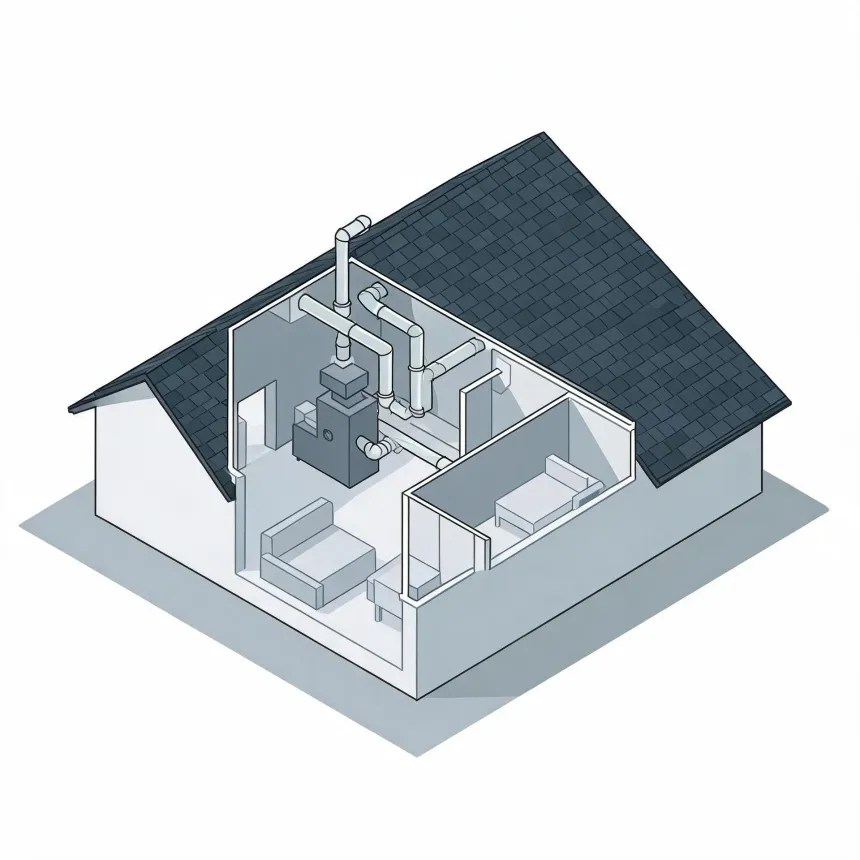
NOAA nClimDiv, 1991–2020 normals

A new furnace and air conditioner would cut about $290 a year off heating and cooling for a typical Kent County home.
Estimates for a typical Kent County home, compared with an older unit built to the previous federal minimum, from EIA household energy data, Rhode Island fuel prices and NOAA climate normals. Your home will differ.
Repair makes sense when one part has failed.
Replacement makes sense when the furnace's heat exchanger is cracked, the air conditioner's compressor has failed, or repairs keep coming.
Rhode Island requires HVAC contractors to hold a state license.
Rhode Island's Department of Labor and Training issues that license after testing the contractor, and it keeps a record of who holds one. The license belongs to the contractor, not to any one job, so it stands behind every repair they take on, including this one.
For a repair on your heating and cooling system, that license is what stands behind the work. The contractor proved they know the trade to the state before they ever touched a customer's system, and the state's record of who holds that license exists because Rhode Island tested them for it.
Source: Rhode Island General Assembly
- Why is my heat not working?
- Start with the thermostat. Make sure it is set to heat and the temperature is set above the room temperature, since a setting bumped by accident is common. If the thermostat looks right, check your breaker panel for a tripped switch, because a furnace that lost power will not ignite. Gas furnaces also need a clear vent and a closed panel door to run, so a door left loose after a filter change can shut the whole system down. If none of that brings the heat back, the igniter or the flame sensor is likely the problem, and that calls for a licensed contractor.
- Why is my system running but not cooling the house?
- The blower running without cool air usually means the compressor outside is not doing its job. Check the outdoor unit first. If it is silent while the indoor blower runs, it may have lost power or tripped a safety switch. If the outdoor unit is running but the coil is coated in ice, turn the system off and let it thaw, then check the air filter, since a clogged filter is one of the most common causes of a frozen coil. If the filter is clean and the coil still froze, the system likely needs refrigerant or a repair only a licensed contractor can make.
- What can I check before calling for HVAC repair?
- Check the thermostat first, the batteries, the setting, and the schedule, since a wrong setting looks exactly like a broken system. Next check the air filter, since a clogged one chokes airflow and can shut a furnace or an air conditioner down as a safety measure. Check the breaker panel for anything tripped, and for a gas furnace, make sure the gas valve is open and the burner panel is fully closed. If the system still is not working after that, a licensed contractor will need to look at it, and in Rhode Island that means someone holding a state HVAC license.