
Duct Cleaning in Warwick, RI
Tell us about your home, and a licensed contractor who covers Kent County will get in touch.
Tell us about the job
It takes about a minute.

Eight months of heating leaves its mark on your ducts
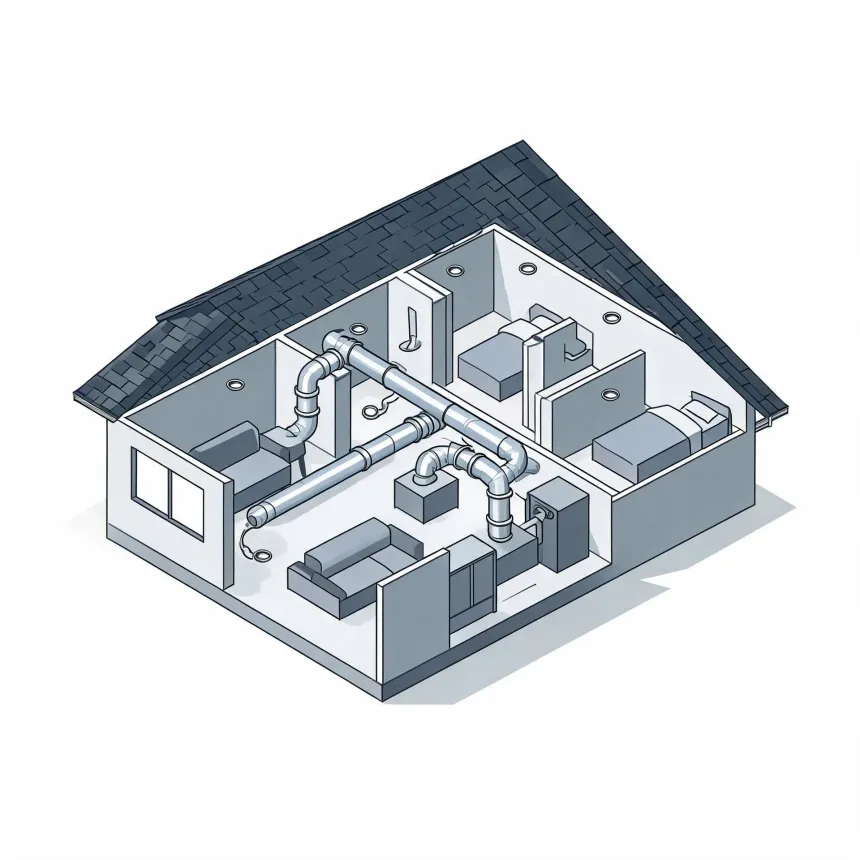
Your furnace runs October through May here, close to eight months of the year. On winter nights averaging 23°F, it cycles on and off for hours at a stretch, and every cycle pushes air through the same ducts. Dust and the fine debris that settles in a house get pulled in and pressed along the duct walls over that long stretch of use.
Power does not always stay on through it. In Rhode Island, 12% of households went at least 24 hours without power in 2024, and this area has seen 50 winter storms and 86 damaging wind events over the last ten years. Each time the system stops and restarts, it disturbs what has settled in the ducts instead of clearing it out. Years of that pattern leave ductwork carrying more than it was built to move, and that is what reaches the rest of the house through the vents.
- 8 months
- October through May, your furnace pushes air through your ducts
- 2 months
- July through August, your air conditioner does the same
NOAA nClimDiv, 1991–2020 normals
- How often should air ducts be cleaned?
- There's no set schedule that fits every home, so clean them when there's a reason to. Dust coming out of the vents, new allergy symptoms in the house, or a renovation that filled the place with drywall dust are all good reasons to have it done. A home with pets or a smoker tends to need it more often than one without.
- Is air duct cleaning worth it?
- It's worth it if your ducts are visibly dirty or you have a reason to think they are, not as something to do on a schedule for its own sake. Ducts that look clean when you check the vents and registers usually don't need it. The clearest case for cleaning is after construction work, a rodent problem, or when you can see dust or debris blowing out when the system runs.
- What does air duct cleaning involve?
- A contractor connects a powerful vacuum to the duct system and uses brushes or compressed air tools to knock loose dust and debris from inside the ducts, then pulls it out through the vacuum. This covers the supply and return ducts, the registers and grilles, and usually the coil and blower housing near the furnace or air handler. The system is sealed back up afterward so nothing gets pulled back in.