A dark gray furnace with two access panels stands in a basement, connected to galvanized sheet-metal ductwork and PVC pipes, with exposed wood framing and a bare bulb light in the background.

Skip calling around

What size generator runs a furnace in Rhode Island

A gas furnace doesn't run on gas alone. The blower, the control board, the igniter all need electricity, so a furnace sized right on paper still won't start if the generator behind it is too small. This page walks through what size actually covers a furnace like yours, so you're not stuck calling around to different installers, re-explaining your setup each time, and weighing quotes that aren't quite comparing the same job.

Skip the calls

A standby generator in the 10 to 14 kW range covers most furnaces here, but the number that matters is the starting watts your blower motor needs, not just the furnace's running load. Furnace motors draw a heavy surge for a second or two when they kick on, sometimes two to three times their running wattage, and an undersized generator will stall right at that moment instead of carrying through it. Since most homes in Rhode Island heat with gas, the furnace itself uses a small share of total power, but losing it during a January outage means losing heat along with it. The right size depends on your furnace's actual motor specs and whatever else you want running on the same circuit, a well pump or a fridge alongside it changes the math. A licensed electrician or generator installer can pull the nameplate numbers off your unit and size the system to start it reliably, not just run it once it's already going.

A dimly lit interior with wood plank flooring where a small portable heater with a glowing orange element sits near an open doorway, with a stove at left, kitchen cabinets and a potted plant at right, and a wooden table and chair in the foreground.

The power went out sometime after midnight, and by six the kitchen is cold enough that you can see your breath near the window. The space heater is pulled close to the table, its coil glowing orange, cord running back toward the hallway outlet. The basement door stands open behind it, the furnace down there dark and silent, blower still, no hum through the vents. Outside the snow hasn't let up and the lines are still down. You keep the kettle on for something to hold onto. Upstairs the kids are still asleep under extra blankets, and you're doing the math on how many hours the space heater can run before it's not enough.


Why does a furnace need so much starting power from a generator?

You've seen the specs on a generator and the specs on a furnace, and the furnace number looks small enough that almost anything should cover it. Then you find out a generator rated well above the furnace's running watts still stalls out or trips when the furnace kicks on. It's not a bad generator. It's the moment the blower motor starts that's the problem, not the moment it's already running.

The blower motor needs a big surge just to start spinning, then settles down

A blower motor has to overcome the weight of its own fan wheel sitting still. For a second or two, it pulls far more current than it does once it's turning at speed, the same way a stalled car takes more effort to push than one already rolling. That surge is the starting watts. Once the blower is up to speed, it settles down to its running watts, which is the lower number most people notice first. A generator sized only to the running watts can power the furnace fine right up until the moment it tries to start, then stall or shut down. Sizing for the surge is what keeps the furnace running through a Rhode Island outage, not just able to turn on once.

A woman in a knitted shawl sits in a living room with a fireplace, shelves, a sofa with cushions, and a lamp by a bright window, looking off to the side.
A woman with long brown wavy hair in a green shirt over a white top stands in a living room with built-in white shelves, a ceiling fan, a potted plant and a sliding glass door.
A woman with shoulder-length gray-streaked hair in a light gray knit sweater stands smiling and looking off to the side in a living room with a sofa, houseplant, framed picture, and sunlit sliding glass door.
A woman with shoulder-length curly gray hair wearing a gray knit sweater stands near a window with a sheer curtain, looking to the side, with a blurred interior room behind her.
A closed laptop and a cream mug of coffee on a coaster sit on a dark wooden table, with a potted plant at left and a kitchen counter, tiled backsplash and shelf of ceramics in the background.

What an undersized generator costs you in January

If the generator can't cover your blower's startup surge, the furnace won't just run weak, it won't start at all. You'll have a generator humming in the yard and a house that keeps getting colder, which in a Rhode Island cold snap is the exact moment you can't afford that. The furnace will try, trip the breaker or stall the motor, and try again, and you're back to space heaters and extra blankets until someone sorts out why.

Finding that out after the fact usually means calling around to a few companies, explaining the furnace, the panel, the square footage, over and over, then sitting with quotes that size the job differently because each contractor is guessing at your blower's surge load from the phone. A contractor who installs standby generators in this area regularly has likely wired a furnace like yours before and knows what size actually starts it, not just what runs it once it's on.

A gray upholstered sofa with a textured cushion sits beside a dark round side table holding a vase of green foliage, with a table lamp and sheer-curtained window behind.
A gray high-efficiency furnace in a basement with PVC venting pipes, a yellow gas line, metal ductwork, concrete walls and floor, and a wood-framed stairway at left.

Generator sized right

The blower kicks on, the igniter glows, the burners light, and the house warms up like the power never went out. The generator behind it was picked to cover the surge, not just the running watts, so nothing trips and nothing hesitates.

A beige furnace with a louvered front panel and metal ductwork stands on a concrete basement floor beside pipes and a white cylindrical water heater.

Generator sized wrong

The furnace tries to start, pulls more than the generator can give, and shuts down before the burners ever light. It'll try again in a few minutes and fail the same way, while the water heater and everything else on the circuit sits idle waiting its turn.

Winter nights average 23°F statewide

23°F is a typical night here in January, not a cold snap. Your furnace is built to run most of the night at that temperature, which means the blower is cycling on and off for hours straight. A generator that stumbles on the second or third start leaves you cold by morning, not just the first time.

NOAA nClimDiv 1991-2020 county normals weighted by homes

  1. Power drops and the generator's transfer switch senses it.

  2. The generator starts itself and reaches full speed.

  3. The transfer switch shifts the furnace circuit onto generator power.

  4. The control board powers up and runs its ignition sequence.

Why does the house feel cold even with the generator running?

You hear the generator outside, steady and loud, but the vents stay cool. Maybe the blower clicks like it's trying, then quits. Maybe the control board lights up for a second and goes dark. These are signs the generator is running the lights and the fridge fine but can't cover the surge the blower needs to start. Left alone through a cold night, the house keeps losing ground, pipes along outside walls get a chance to drop toward freezing, and anyone elderly or very young in the house is sitting in air that keeps getting colder, not warmer. A generator that handles everything else but stalls on the furnace isn't sized for what you actually need it for.

A beige furnace with two louvered front panels stands on a concrete basement floor beside galvanized ductwork, metal pipes, and a wooden post.
Before you get your furnace installation
A gray high-efficiency furnace stands on a concrete basement floor beside galvanized sheet-metal ductwork, with white PVC vent pipes, gas and water lines, and unfinished wood framing behind it.
After you get your furnace installation
An unfinished basement with a concrete floor, pink insulation on one wall, exposed joists, galvanized sheet-metal ductwork, PVC vent pipes, and a tall gray furnace with attached gas and electrical lines.

Describe it once

Your request goes to one pro, not a list of companies.

Answer a few questions instead of calling shop after shop.

Answer a few questions

Sending the form costs nothing.

A gray high-efficiency furnace in a basement with white PVC vent pipes, sheet-metal ductwork, copper and black piping, a condensate pump, and insulated walls above a concrete floor.
The furnace is running clean here. The ductwork, the gas lines, the condensate pump all tied into a generator sized for the blower's startup surge, not just its running watts.
A beige residential furnace stands on a concrete basement floor beside galvanized sheet-metal ductwork, a round flue pipe, copper gas piping, and a PVC condensate line, with a wood-paneled wall at right.
This is the same furnace on a generator that only covers the running load. The startup surge trips it before the burners ever light.

Portable or standby for your furnace

Portable generator

  • A portable generator usually tops out around 7,000 to 10,000 watts, which can fall short once the blower's startup surge is added to everything else running.
  • You have to wheel it out, fuel it, start it by hand, and run a cord to the house every time the power drops.
  • It won't run unattended overnight, so someone has to check the fuel level and refill it while the furnace is cycling.
  • There's no automatic transfer switch, so the furnace stays off until someone connects the generator and switches the circuit over by hand.
  • Running it inside a garage or near a window isn't safe, so it has to sit outside in the cold while you're the one checking on it.

Standby generator sized for the furnace

  • A standby unit in the 10 to 14 kW range is sized to cover the blower's starting watts, not just its running load, so the furnace starts the way it's supposed to.
  • It's wired permanently to the house with an automatic transfer switch, so it starts itself within seconds of an outage, furnace included.
  • It runs on the home's existing natural gas or propane line, so there's no fuel to haul or refill while it's running.
  • It sits outside on a pad and needs no one to start it, fuel it, or watch it once the power goes out at 2 a.m.
  • A local contractor who installs and sizes these for furnaces here can match the unit to your blower's actual surge instead of guessing at a number off a chart.
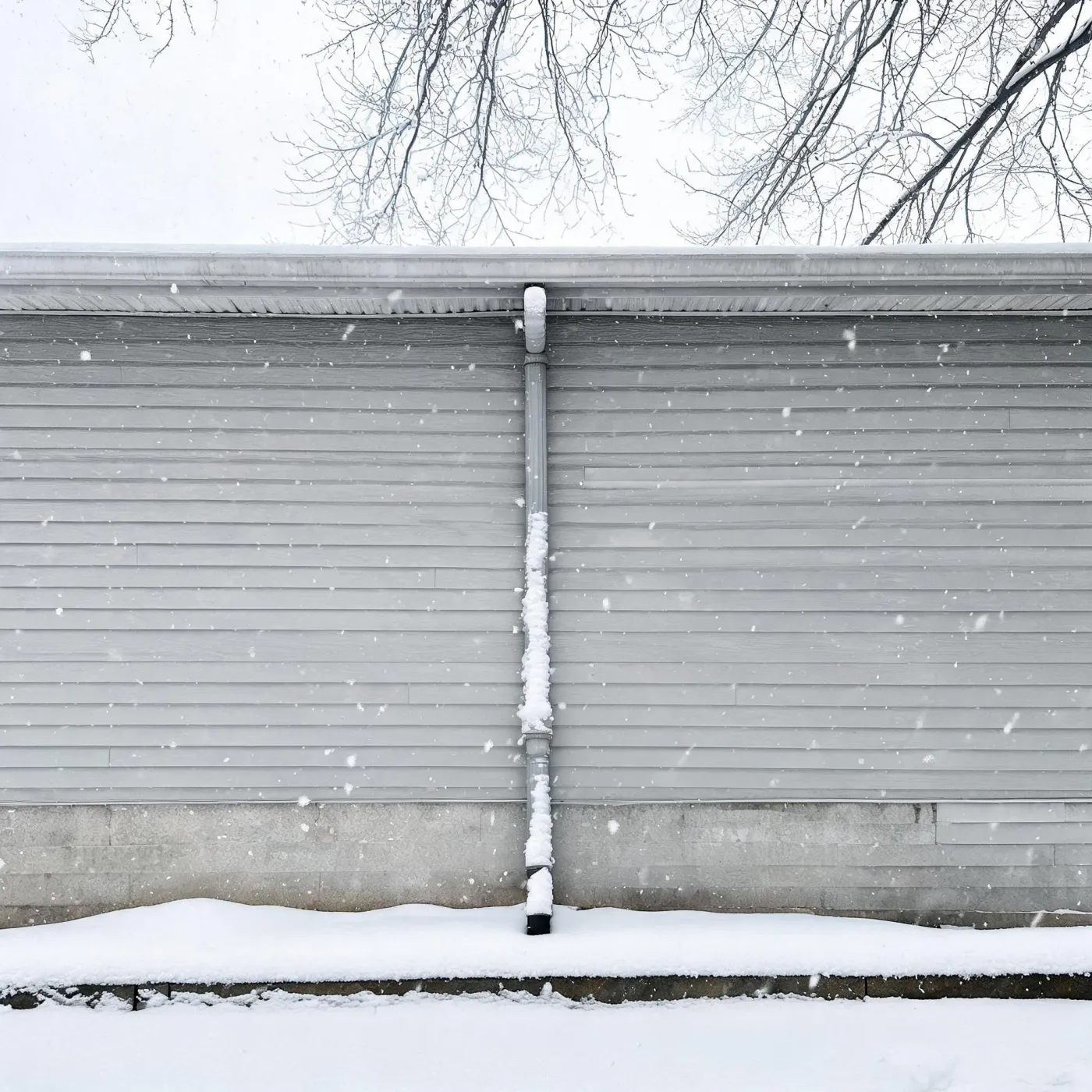
Gray horizontal lap siding on a building above a concrete block foundation, with a central downspout partly coated in snow, falling snowflakes, snow-covered ground, and bare tree branches against a white sky.

Statewide, winter nights average 23°F, and that's the number your furnace is working against for most of the night, not just at the coldest point. Source: NOAA climate normals. At that temperature the blower isn't cycling on for a few minutes and shutting off, it's running long stretches to keep up, which means more starts, not fewer. Each one of those starts pulls that same surge from whatever is powering the house. A generator that handles the first start fine but can't keep up with the fifth or sixth one in a row is the kind of problem you'd only notice at 3 a.m., when the house has been warm for hours and then suddenly isn't.

NOAA nClimDiv 1991-2020 county normals weighted by homes

A woman and a sleeping child wrapped together in a cream knitted blanket on a couch, with a potted plant, framed photo and lit lamp in the background.
A gray-haired woman in a cream knit sweater stands in a dimly lit kitchen at night, looking to her right, with a round loaf of bread in the foreground and a dark window and potted plant behind her.

What Size Generator Your Furnace Needs

  • A generator in the 10 to 14 kW range covers most furnaces here, sized to the blower's starting watts rather than its running load.
  • An undersized generator can leave the furnace humming outside while the blower refuses to start, especially on nights near 23°F.
  • A licensed local installer who works on this equipment every winter knows which furnace and blower combinations need the higher end of that range.
  • Sizing comes down to one contractor looking at your specific furnace and blower, not a guess based on square footage alone.
  • Getting this matched to one local installer means no comparing quotes from several companies or explaining the same blower specs twice.
  • The right size keeps the furnace running the way it did before the outage, cycling on and off through the night without hesitation.

Most furnaces in Rhode Island run fine on a standby generator in the 10 to 14 kW range, as long as the unit is sized to the blower's starting surge and not just the watts it draws once running. That surge is the number that trips people up. A furnace that looks modest on paper can still stall a generator that was picked by running load alone, and the result is the same cold house you were trying to avoid, now with a generator running in the yard for nothing. Getting the size right means knowing your specific furnace and blower, which is why this isn't really a math problem you solve with square footage. It's a licensed local installer looking at your equipment, the one who's pulled apart blower motors like yours all winter and knows which combinations need the higher end of that range and which don't. You get matched to that one contractor, not a handful of companies calling back with different numbers and making you explain the same specs over again. When the sizing is right, nothing about a power outage changes how your furnace behaves. The blower cycles on and off through the night the same way it did before the lines went down, and the house holds its temperature through whatever January throws at it. That's the whole point of matching the generator to the furnace instead of guessing.

At dusk, a dark board-and-batten house with a standing-seam metal roof and lit entry walkway of stone pavers, with two large outdoor heat pump units on a stone-walled pad at right and trees and hills in the background.

Furnace Installation

No phone calls to make

New system or replacementFurnace or heatingRhode Island
Step 1 of 2

What ZIP code is the job in?

  • A cream chunky cable-knit throw draped over a beige upholstered armchair beside a bright window, with a wooden side table holding a book and a vase of leafy branches at left.
    • Describe your furnace job, and a local pro who handles it gets in touch.
    • A local installer who puts in furnaces gets your project.
  • Living room corner with a gray sofa holding beige pillows and a knit throw, a round wooden coffee table with a dark planter and shallow bowl, a jute rug, a floor lamp, a framed landscape print on the wall, and a window showing trees.
    • Once you send the form, finding a pro is off your list.
    • After you send the request, you're done searching.
  • A living room corner with a cream sofa and cushion, knit throw, wooden coffee table holding a shallow bowl and dark ceramic vase with green foliage, a floor lamp, potted plant in a woven basket, and linen curtains at a window.
    • Skip collecting and comparing quotes for the new furnace.
    • Fill out one short form instead of calling around.
  • A round reclaimed-wood coffee table with a black metal base sits on a woven rug in front of a cream sofa with cushions, with a lit built-in fireplace and a tall indoor tree in the background.
    • The pro who reaches out is licensed in Rhode Island.
    • Only one pro gets your request, so you hear from one company.